
Podcast: Play in new window | Download (Duration: 45:00 — 51.5MB)
Subscribe: Apple Podcasts | Spotify | Android | Podchaser | RSS | More
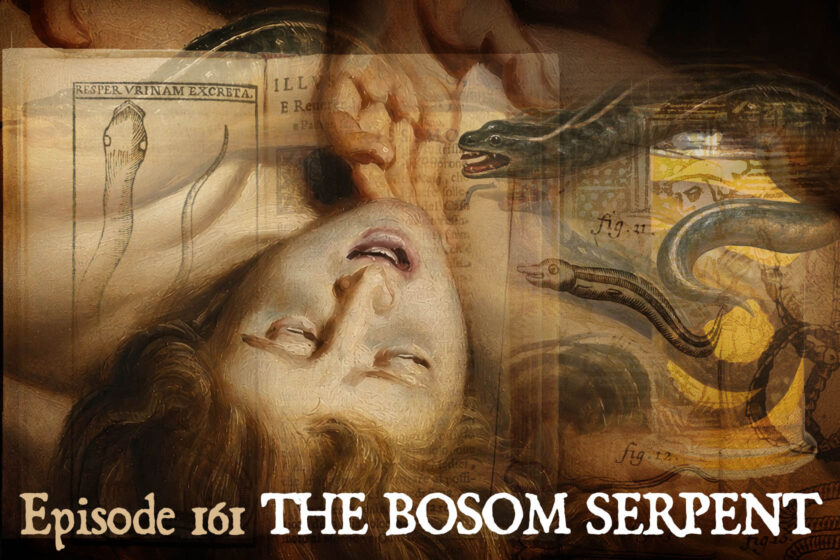
We open with a bit of Nathaniel Hawthorne’s 1843 story, “Egotism; or, The Bosom-Serpent,” and have a look at some earlier literary manifestations of the motif in Aesop, Chaucer, and Shakespeare.
The earliest examples of bosom serpent lore can be found in some rather starting miracle stories associated with the Christian saints, associating the serpent, quite naturally, with Satan. Among these is an eleventh-century Spanish tale that left behind a particularly curious religious relic.
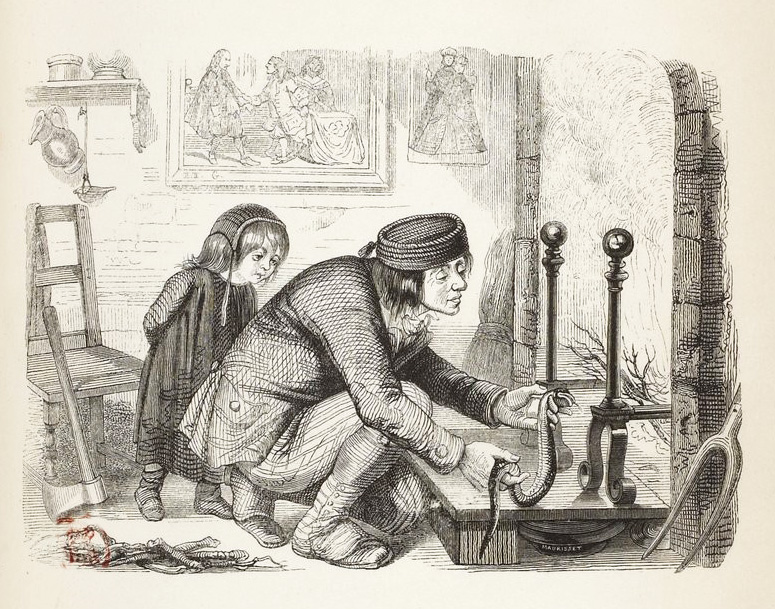
Next, we have a look at some inventive medieval remedies for the condition, including one described in a saga of the Norwegian kings, and another involving some rather unorthodox uses of roast veal and warm milk.
From the Renaissance, we hear a stomach-turning anecdote from the autobiography of the Italian artist Benvenuto Cellini, followed by an extraordinary case documented by the Flemish natural scientist Cornelius Gemma, one that blurs the boundaries between physical illness, witchcraft, and demonic possession.
With the appearance of similar accounts in eighteenth- and nineteenth-century medical journals, we consider possible natural explanations for the phenomenon. We also explore one of the more celebrated American cases, that of a Tennessee woman, Thankful Taylor and the serpent purportedly extracted from her in 1874.
Turning our attention to more recent folklore, we get a glimpse of some peculiar beliefs surrounding frogs and newts in the British Isles, including an amusing Yorkshire tale of a creature known as the “waterwolf.”
Finally, we look at the new life given to the bosom serpent in twentieth-century tabloid journalism and, more spectacularly, in horror and science fiction films, from David Cronenberg’s Shivers and the notorious chest-bursting scene in Alien to some more recent cinematic offerings.