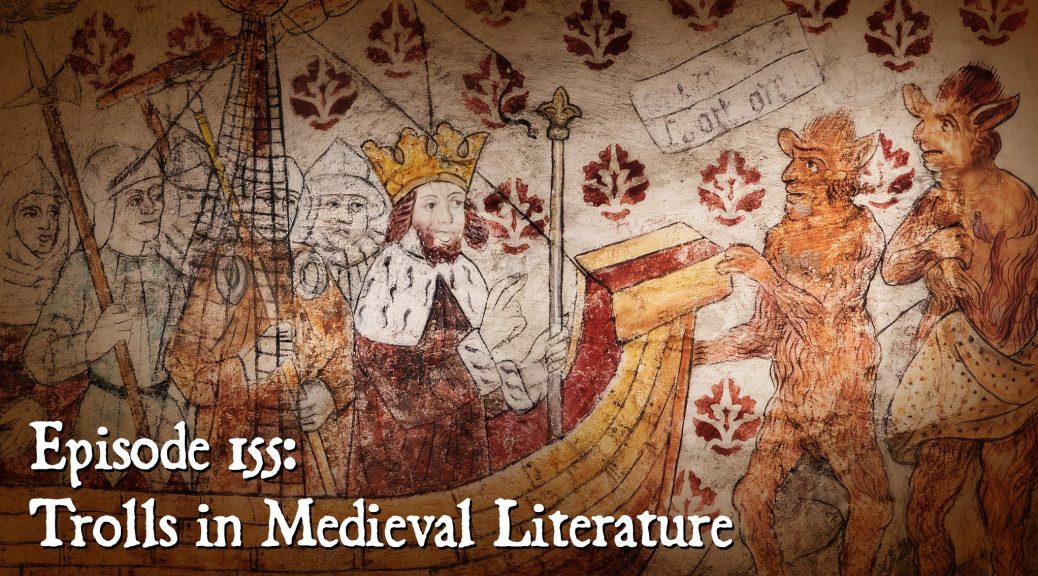
Trolls, as presented in medieval literature, are vastly different from the creatures we encountered in our last episode’s collection of 19th-century Norwegian folktales. These Viking Age trolls are more vividly and gruesomely described, and the “troll-women,” who frequently appear, are akin to witches.
We begin the show with a traditional song from the Faroe Islands, “Trøllini í Hornalondum,” telling the story of St. Olaf battling trolls on the coast of Norway. While the ballad presumably originated in Norway, it was first recorded by the Danish priest and historian, Anders Sørensen Vedel, in his 1591 publication, Hundredvisebogen, (the Book of 100 Ballads.”)
While St. Olaf (King Olaf II) is regarded as the saint who drove paganism from Norway, but this struggle was ongoing with trolls continuing to embody the old pagan world as belied by various tropes — their dislike of church bells, and fear of crosses. We’ll next look at an interesting case from Iceland presenting a direct conflict between a church and troll. It was collected by the “Grimm of Iceland, Jón Árnason, a librarian and museum curator who published several collections of folktales, beginning in 1852. This one’s from his second volume of Icelandic Folktales, published in 1864.
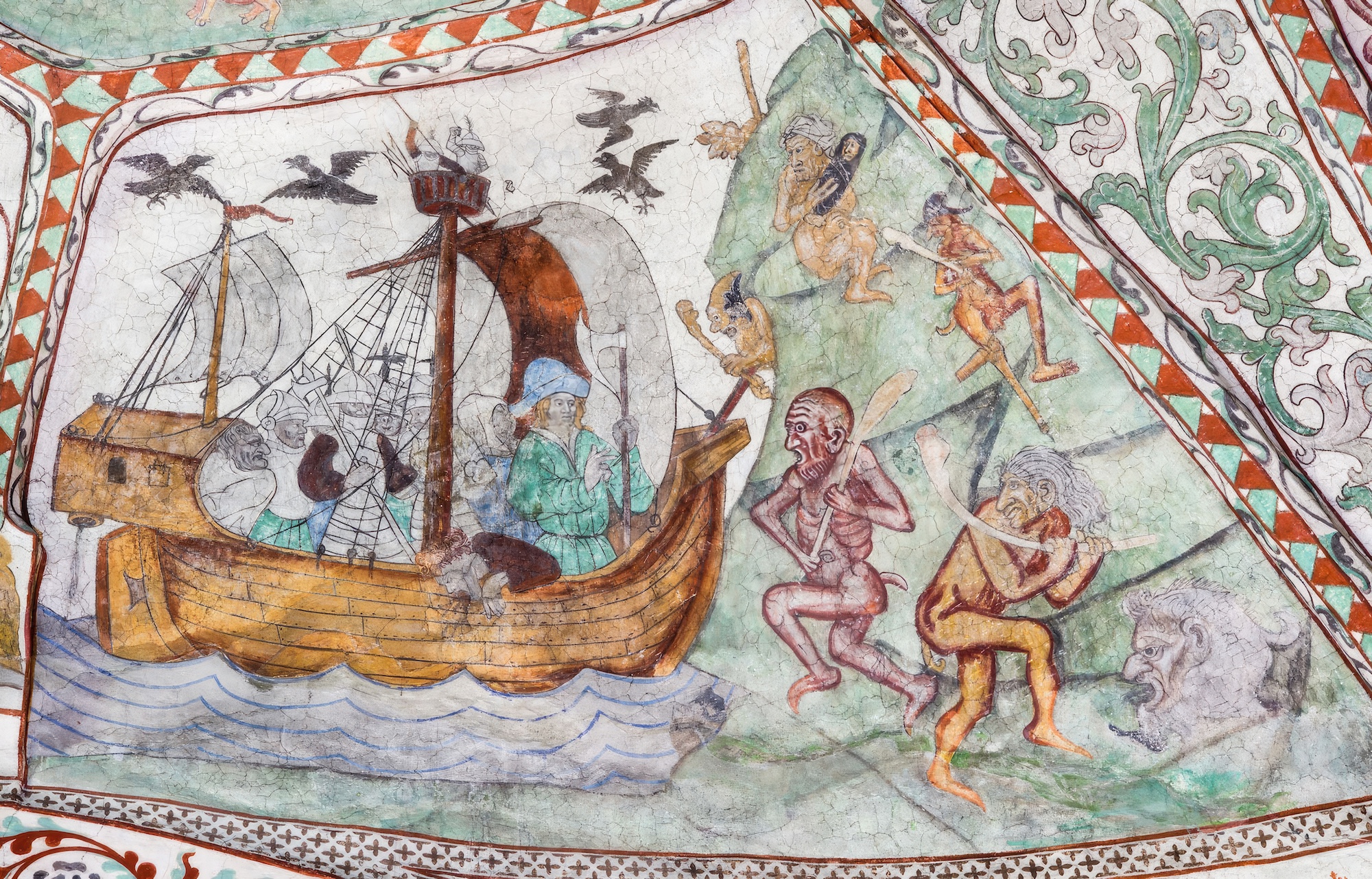
Encountering trolls — St. Olaf’s Journey, fresco by Albertus Pictor, ca 1470, Dingtuna Church, Västerås, Sweden
After this, we have some general comments on the historical relationship between trolls and giant (jötunn, Þurs and risi) as well as trolls and witches or sorcery (trollldom). Our remaining four stories (the medieval ones) present trolls of the Icelandic saga, epic stories written in Old Norse and relating the adventures of ancestral heroes or rulers, usually with some connection to history but with certain creative embellishments. A subset of the sagas, which take place in their own mythic timeline, the fornaldarsögur were simply written with entertainment in mind and more oriented toward magic and folklore – and trolls, so we’ll lok at a couple of those. And then there’s the þáttr, a sort of short story, sometimes folded into sagas, but often reproduced independently.
As this is a storytelling episode, we won’t spoil the tales with plot outlines, but the sources (in order) are:
The 14th-century þáttr of Thorstein Ox-leg as translated in William Craigie’s 1896 compilation called Scandinavian Folk-lore: “The Trolls in the HeidarWoods.”
A portion of the 16th-century Illuga Saga, translated by Philip Lavender of the Viking Society for Northern Research.
The 14th-century Saga of Grim Shaggy-Cheek as translated by Peter Tunstall.
The Saga of Orm Stórolfsson, as retold by William Craigie in Scandinavian Folk-lore – under the title: “The Giant on Sauðey” (Saudey).
We end with a song “Trøllini Trampa,” (“Trolls’ Tramp”) by the Faroese band, Spælimenninir
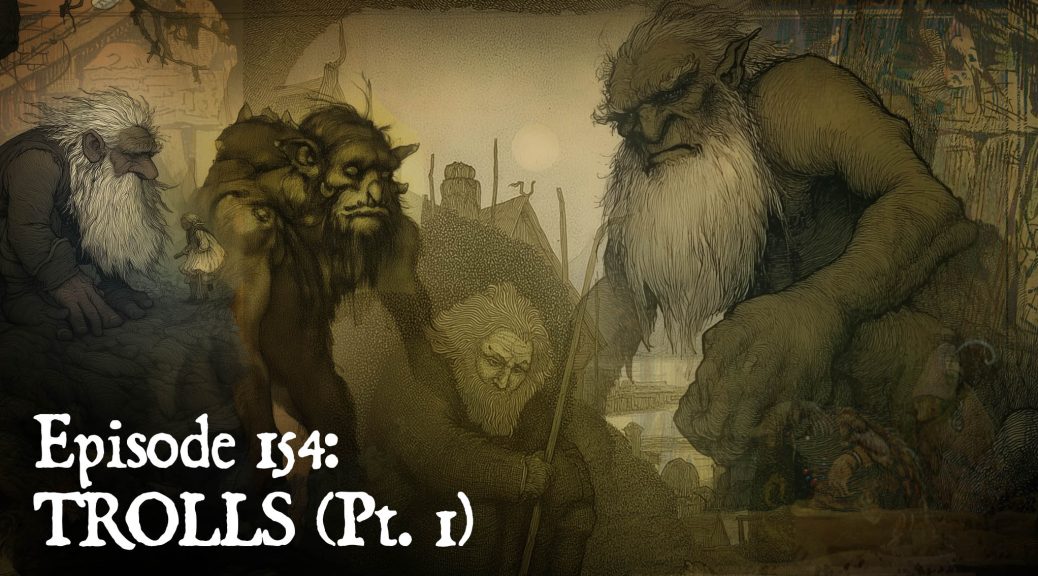
Trolls in Scandinavian folklore can be a little different from what’s imagined in the rest of the world. We begin our show with a montage of clips from recent movies, Trollhunter (2010), Troll (2022), and Troll 2 (2025) — the latter two being Netflix productions that have rekindled interest in the subject while reimagining trollsin a way that does not always conform to the folklore. While all Scandinavian countries have their share of troll lore, this episode focuses specifically on Norway, the country with the most compelling collection of troll folklore.
The first portion of our show looks at the Norwegian writer Henrik Ibsen’s play along with incidental music composed for the play by his associate Edvard Grieg. Introducing this topic is a clip from the 1970 musical Song of Norway, a fanciful Edvard Grieg biopic that garnered particularly bad reviews. We learn a bit about why Grieg hated his well-known “Hall of the Mountain King,” a composition which accompanies Peer Gynt’s encounter with trolls inside a mountain in the Dovre mountain chain. We also learn what Ibsen hoped to achieve in telling the story of his antihero Peer Gynt, and how he wrestled with the movement known in Norway as Romantic Nationalism.
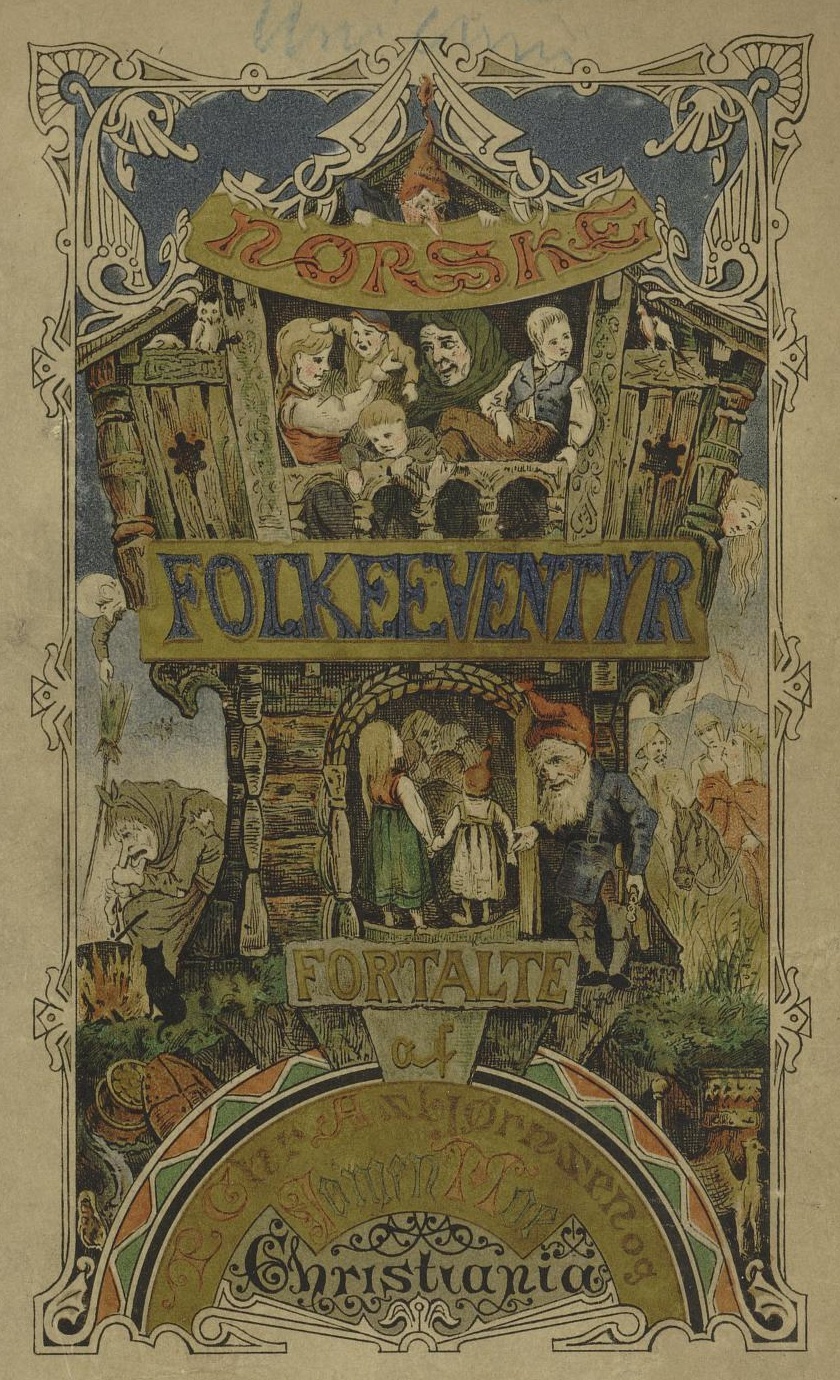
Next we look at two figures integral to this movement, Peter Christen Asbjørnsen and Jørgen Moe, a pair of folktale collectors often described as the “Brothers Grimm of Norway.” Their 1841 publication, Norwegian Folk-Tales, along with updated volumes published in 1844, 1845, and 1871, provide most all the troll tales with examine in this episode. An exception to this is a book authored by Asbjørnsen alone, High Mountain Scenes, volume 2, Reindeer Hunt at Rondane. Published sometime before 1846, it’s the only volume referencing tales told about Peer Gynt, those being very loosely represented in Ibsen’s play.
Asbjørnsen & Moe’s “Norwegian Folk Tales”
The first of these we retell concerns a creature known as “the Bøyg,” something referred to as a type of troll in the story is described more as a giant serpent of sorts. We follow this with more Peer Gynt episodes involving male trolls flirting with human females and a troll poking his enormous nose through a cabin window and suffering the consequences inflicted by Gynt. The final story, “The Cat on the Dovre-Mountain,” takes place at Christmas, a time when troll encounters are particularly prevalent, and involves Gynt outsmarting a group of bothersome trolls via a peculiar stratagem.
Next, we run through some lesser-known details of the best-known troll tale “The Three Billygoats Gruff.” We follow this with another well-known (in Norway) story, “The Boy Who Had an Eating Match with a Troll.” It involves a youth outwitting a troll with a particularly gruesome ruse It was familiar enough to Norwegian audiences to be referenced in Trollhunter.
Next we look at a character Askeladden, who is pitted against trolls in several of Asbjørnsen & Moe’s stories. He’s usually describing the good-for-nothing youngest brother of a trio, an underdog who surprisingly achieves great things. His name (literally “ash lad”) referenes his stay-at home habits, in particular, sitting by the hearth playing in the ashes. We learn of several characters with related names and habits in Scandinavian literature and a more insultingly rude nickname for such characters, one which Asbjørnsen & Moe chose to censor from their stories.
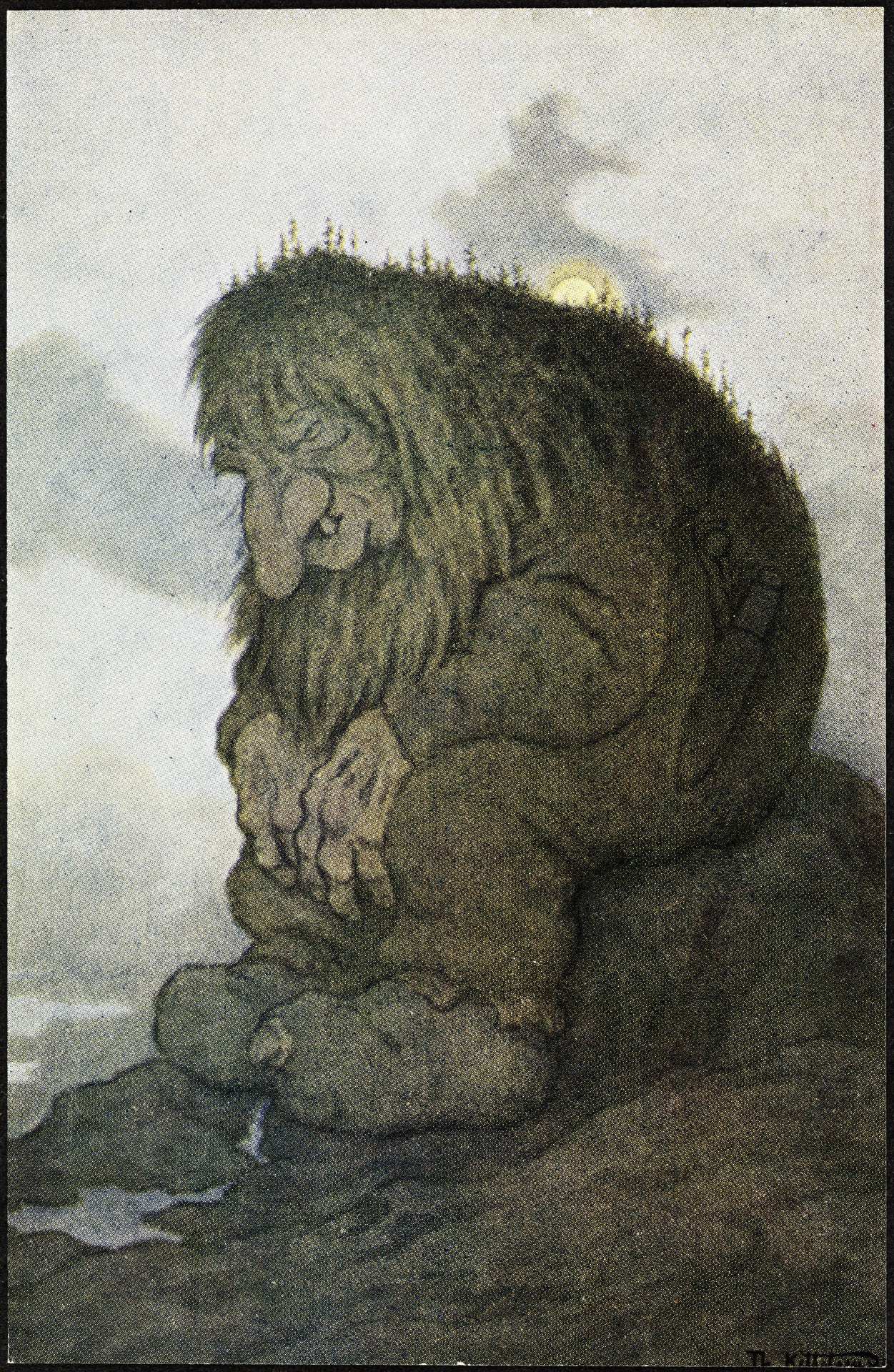
Theodor Kittlesen, “Troll Pondering How Old iIt Is” (1911)
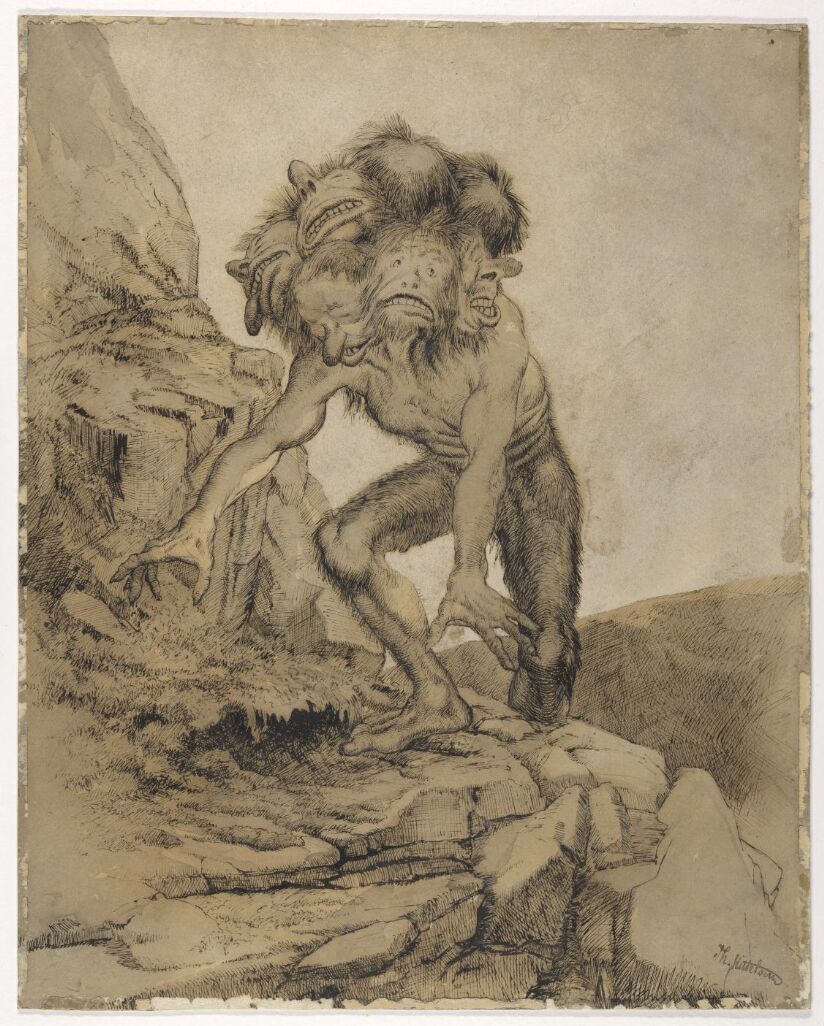
Our next troll tale, “The Lads who Met the Trolls in the Hedale Woods,” gives us particularly monstrous trio of trolls sharing a single eyeball. While this is atypical, we also encounter here the common trope of trolls sniffing the air for “Christian blood,” a suggestion that their kind of an older pre-Christian order. A reference to trolls using magic is also contained in this story, something we’ll run into in other tales.
We then hear some clips from a couple of Asbjørnsen & Moe-inspired films, the 2017 Norwegian film Ash Lad: In the Hall of the Mountain King and its 2019 follow-up, The Ash Lad: In Search of the Golden Castle. The “Golden Castle” in Norwegian film title and the title of the relevant Asbjørnsen & Moe story is “Soria Moria Castle.” This one also features trolls, but in a peripheral role. It’s a longer legend quest rather than a short folk tale in which we encounter three multi-headed trolls holding human women captive in three different castles.
Our last story, “The Hen is Trips in the Mountain,” takes its weird title from a strange phrase uttered to open a door into a mountain, like “Open Sesame.” When a young woman enters theis particular mountain looking for a lost hen, she meets an unpleasant end, as does her younger sister, but when the youngest of the three enters, she manages not to repeat the mistakes of her two siblings and later discovers that trolls can explode when touched by the first rays of dawn (as well as turning to stone, another common folklore trope).
We wrap up the show with some interesting stats regarding the fascination trolls exert over the heavy metal subculture.
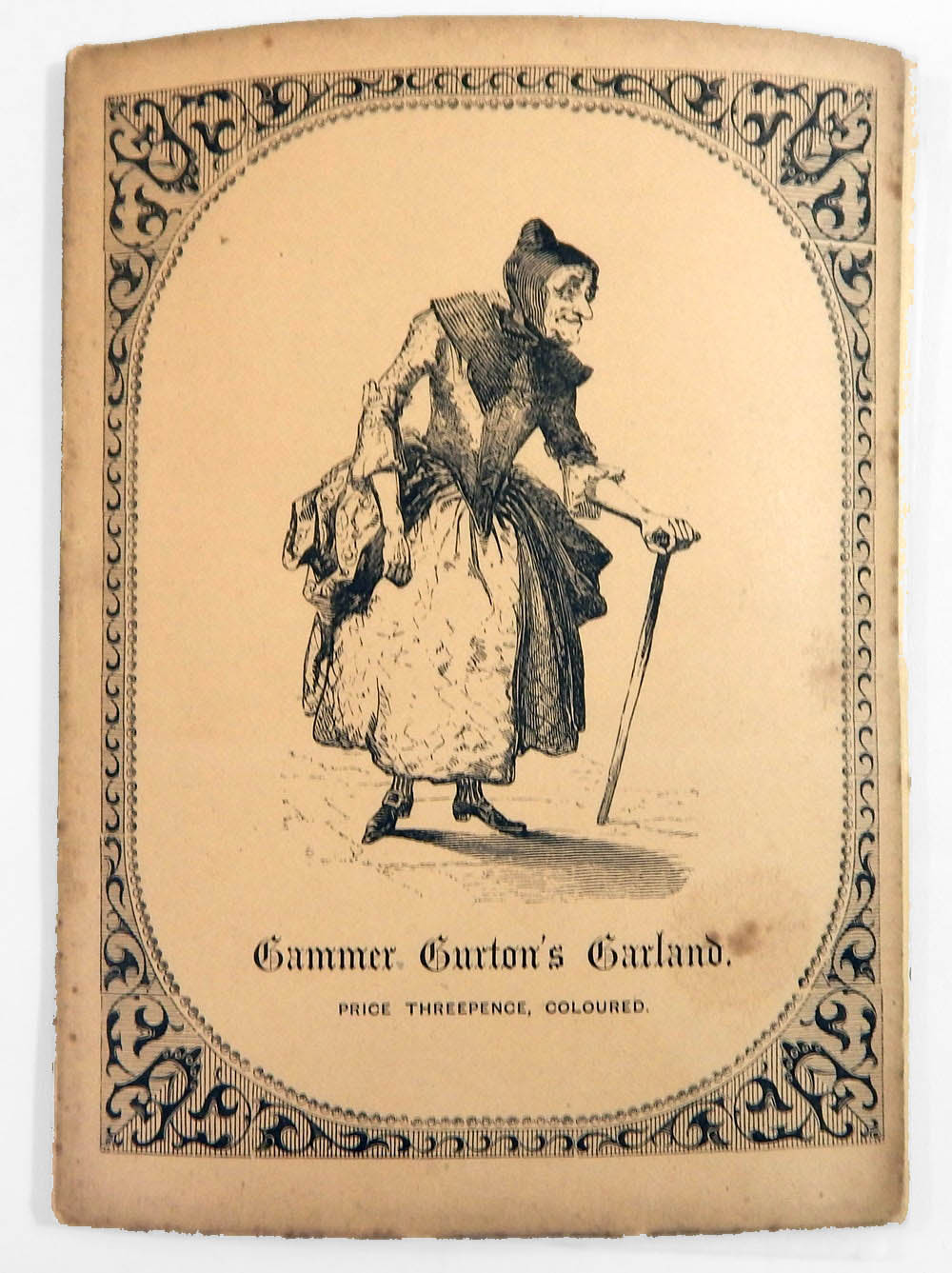
Gammer Gurton’s Garland, published in 1784, is one of the earliest collections of English nursery rhymes, and contains verses both familiar and alarmingly unsettling.
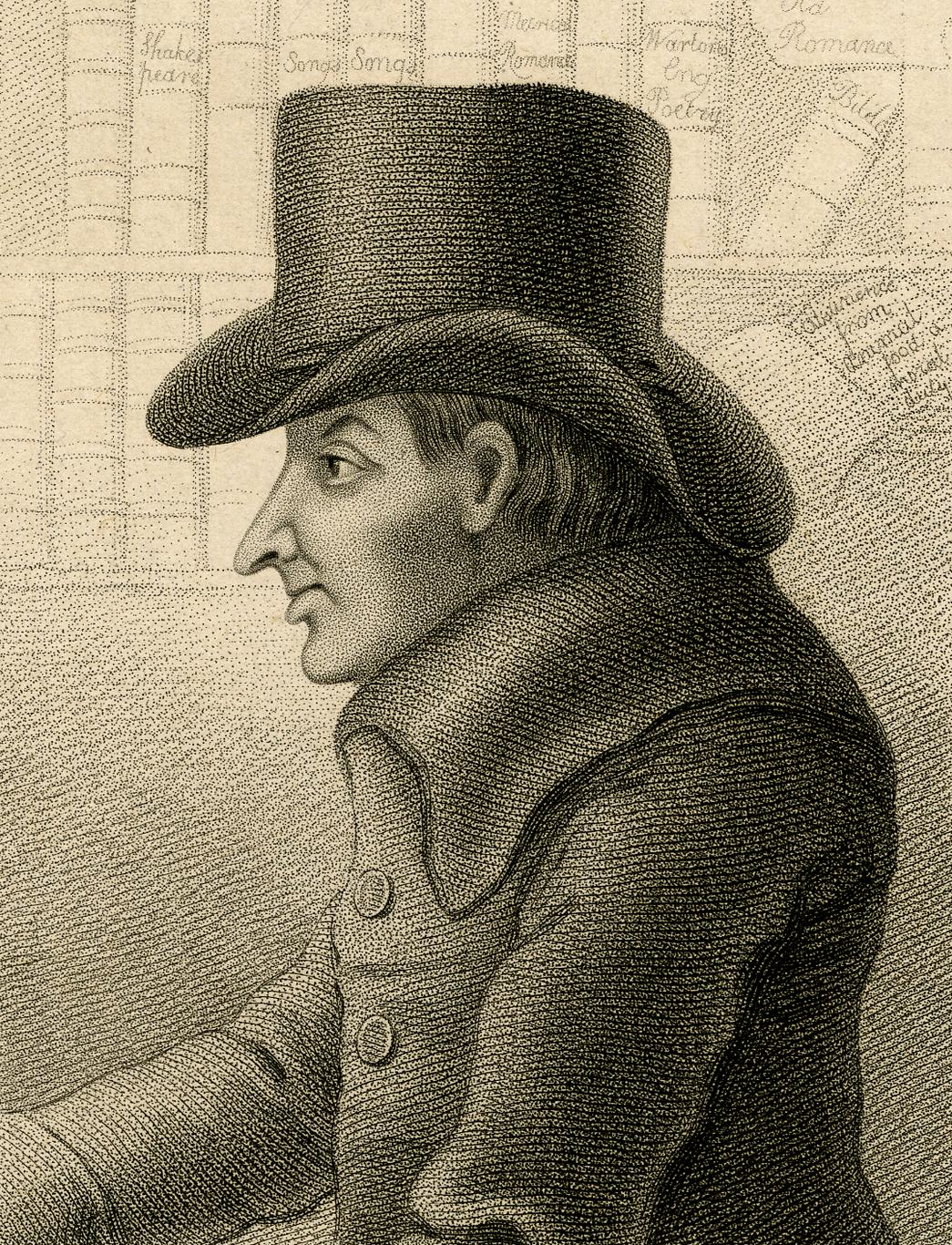
Intended to be read to toddlers (i.e., “children who can neither read nor run,” according to its subtitle) and named after a fictitious Grandma (“Gammer”) Gurton, who’d be analogous to Mother Goose, the volume were assembled by the eccentric scholar Joseph Ritson, who was known for his collecting of Robin Hood ballads, vegetarianism and ultimate descent into madness.
Portrait of Joseph Ritson by James Sayers, early 1800s.
We begin our episode with a snippet of a 1940s’ rendition of “Froggy Went a-Courting” by cowboy singer Tex Ritter. It’s a relatively modern take on Ritson’s “The Frog and the Mouse.” But like quite a few rhymes in the collection, this one had appeared in print earlier. Already in 1611, British composer of rounds and collector of ballads, Thomas Ravenscroft, had written out both lyrics and musical notation for “The Marriage of the Frogge and the Mouse,” a song he described as a folk song or “country pastime.”
While a few other rhymes in Ritson’s collection were borrowed from one of two earlier editions of nursery verses (both published as Tommy Thumb’s Song Book 40 years earlier), most of what he collected appeared for tge first time in Gammer Gurton’s.
We hear a bit about some of the familiar rhymes that premiered in this collection, including Goosey, Goosey Gander, Ride a Cock-Horse to Banbury Cross (with the “rings on her fingers and bells on her toes” lady), Bye, Baby Bunting, and There Was an Old Woman who Lived in a Shoe.” Ritson’s version of the last, however, takes a rather rude and unexpected turn.
1865 edition of Gammer Gurton’s
Many, if not most, of Ritson’s rhymes seem to have been weeded out of the gentile or sentimental collections we know today. Naturally, we devote attention particularly to these objectionable verses. Included are a handful of aggressively nonsensical rhymes, which could pass for 18th-century Dada and verses notable for their cruelty. The most alarming contain brutal slurs, threats, and playful references to assault, adultery, matricide, suicide, and animals going to the gallows.
The last third of our episode is dedicated to poems noteworthy for their survival as musical ballads. The first discussed is the basis for song “Lady Alice,” which later appears in James Child’s 1860 collection The English and Scottish Popular Ballads. Ritson’s version, “Giles Collins and Proud Lady Anna,” is a greatly simplified version of the ballad later cited by Child. While toddlers might appreciate the simpler storytelling, the subject matter — namely, doomed lovers — is not the normal stuff of healthy nursery rhymes. More surprising, is the fact that Ritson’s story begins with Giles Collins in the process of dying and Lady Anna dead (of heartbreak) within a few verses. After their deaths, a tentative suggestion of undying love, a lily reaching from Giles’ grave toward Anna’s, is destroyed – an unhappy turn on the not uncommon motif of a rose and briar entwining over lovers’ graves.
We close with a discussion of “The Gay Lady who Went to Church,” an innocuous-sounding rhyme, intertwined with the history of two rather gruesome folk songs popular around Halloween: “There Was an Old Lady All Skin and Bones” and “The Hearse Song” AKA “The Worms Crawl In.” Also discussed is a surprising link between Ritson’s nursery rhyme and a faux-historical ballad invented for the very first Gothic novel, Matthew Gregory Lewis’ The Monk.
The Christmas Eve ghost story is a fine old tradition associated with Victorian and Edwardian England, one that’s been making a comeback on both sides of the Atlantic. Since 2018, Bone and Sickle has enthusiastically embraced the custom.
Our offering for 2025, is “The Other Bed” written by E.F. Benson in 1912 and read for us by Mrs. Karswell.
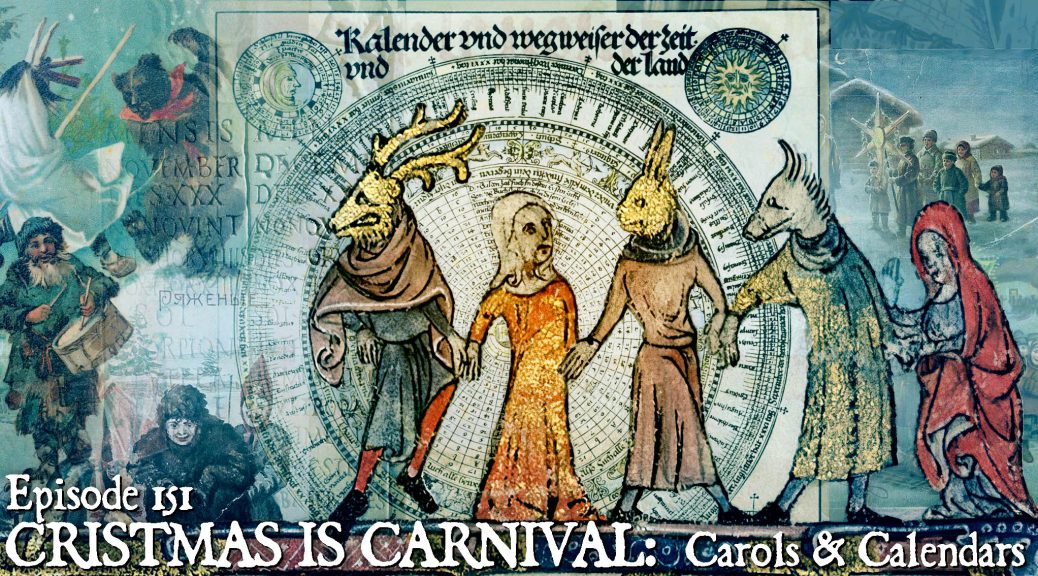
Historically, the celebration of Christmas and Carnival could overlap, and there is some reason to believe that customs associated with the former were inherited by the latter.
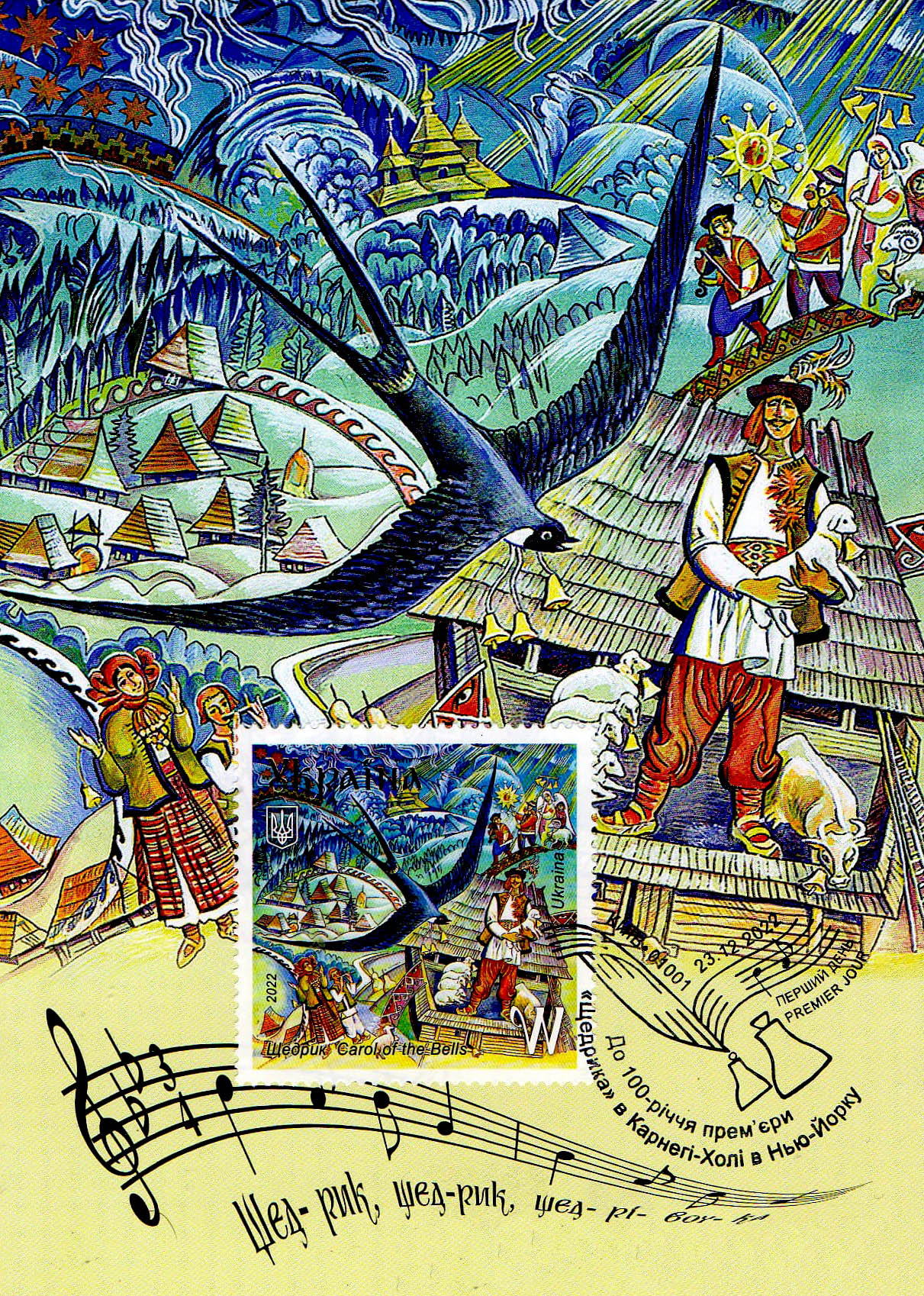
A clue to this calendrical shift is offered by the Christmas song, “Carol of the Bells,” which uses the melody of an old Ukrainian New Year;s carol, one which dates back to the era in which New Year was celebrated in March (hence the springtime imagery of its original Ukrainian lyrics).
Ukrainian postcard commemorating the folk song”Shchedryk” source of “Carol of the Bells”
After a brief look at the variable date chosen to celebrate the New Year throughout European history, we take some time to rethink our modern understanding of what constitutes the Christmas season. The common notion that the season ends on December 25 or January 1, possibly including the weeks leading up to those dates, in historical understanding, was reversed, with Dec. 25 representing the start of Christmastide, which at the very least ran until Epiphany (Jan. 6) or Candlemas (Feb. 2).
The merger of Christmas and Carnival is not only aided by the historically later end date of Christmastide, but also the variable start date for Carnival. A number of regional dates preferred for those festivities are discussed with Germany’s initiation of festivities on November 11 being the earliest.
Another reason to suspect that Carnival inherited some of its customs from Carnival is the carnivalesque quality of the Christmas Feast of Fools celebrated anywhere from Dec. 26 to January 6. The wild, and sometimes dangerous revels celebrated on those days (and discussed in Episode 100) were ended by local bishops at roughly the same time that Carnival celebrations in France and Germany emerged, suggesting re-channeling of anarchic impulses and customs.
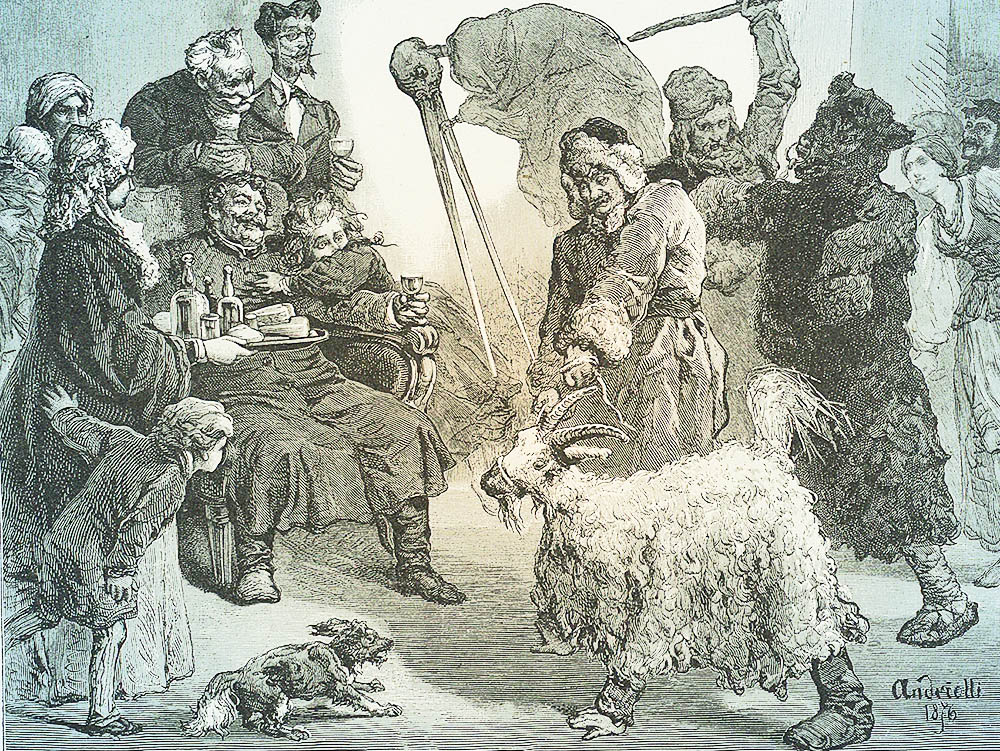
Our discussion then turns to the Roman New Year, the January Kalends, which likely inspired chaotic elements around the Feast of Fools. Of particular interest here are accounts of celebrants dressing in animal hides and horns. a custom that seems to have survived in certain Carnival traditions, including a number discussed in my Carnival book. One of these, the Kurent of Slovenia, who happens to be rather similar to the Austrian Krampus across the country’s northern border.
In Western Bulgaria too, another Carnival figure, the Kuker, in western regions also makes use of animal hides and horns (as well as bells). Bulgaria also provides us with an interesting 20th-century case study of the merger of the traditions of Christmas (or “Surva,” the Bulgarian New Year) merging with springtime fertility customs of Carnival, both strands being associated with the Kuker.
We wrap up with a brief look at Slavic celebrations of the Christmas cycle as Koliade (various spellings), a name for Christmastide and the customs associated with it, particularly door-to-door “good luck visits” incorporating short plays and songs, kolyadka in Ukrainian, the original of “Carol of the Bells” (Shchedryk/”Bountiful Evening”) being one of these songs
“New Year’s Carols” (Kolędnicy noworoczni) from “A Polish Year in Life, Tradition and Song” (1900).
This is a special short episode looking at fictional evidence used to bolster horror narratives in literature, film, and broadcast media. We compare the found-footage phenomenon with earlier literary techniques and discuss some famous hoaxes and Halloween pranks, some historical and others closer to home.
This year, in the tradition of Halloween fortune-telling, we have an interactive divination game you can play at home. It comes from aa 19th-century book on cartomancy called, The oracle of human destiny: or, the unerring foreteller of future events, and accurate interpreter of mystical signs and influences; through the medium of common cards.
TO PLAY ALONG, you will need an ordinary DECK OF CARS or you could can draw your cards from a VIRTUAL DECK like the one on deck.of.cards. (https://deck.of.cards).
You will also need to know the ELEMENTAL GROUP of your ASTROLOGICAL SIGN.
They are:
FIRE SIGNS: Aries, Leo, Sagittarius
EARTH SIGNS: Taurus, Virgo, Capricorn
AIR SIGNS: Gemini, Libra, Aquarius.
WATER SIGNS: Cancer, Scorpio, Pisces.
Fortunes read fall into these categories (in this order):
Absent Friends and Relatives Travel Friendship and Enmity Health and Longevity Property Lost Love Wealth and Fortune Success A Potential Spouse Happiness, Misfortune
There are 88 fortunes provided, so you’ll have more fun listening with friends who have different astrological signs. Or write down the signs of absent friends and draw cards on their behalf.
If you’ve been curious regarding Mr. Ridenour’s and Mrs. Karswell’s troubles with anomalous events in the house, this short episode should answer some of your questions as Dr. Bartusch and crew attempt to restore order.
A 1968 Halloween “Spook Show” in the Midwest left an unsettling heritage of urban legends possibly rooted in even more unsettling facts. What little is definitively known regarding this event comes from the newspaper archives of the Danville News-Gazette, in which we find a short October 28 promo piece in the “Entertainment” section featuring this photo presumed to be of the impresario behind it all, J. Jolly.
“Dr. Killer Hertz” will speak to “Space Spirits” (courtesy News-Gazette).
There is also this advertisement for the event:
Courtesy News-Gazette.
That’s all the story you need for now. You can form your own opinions as we grope our way between fact and fiction. Headphones and lights out for best results!
The Halloween Jack-o’-lantern, made from pumpkins in the US and originally turnips in the UK, began its existence as a wisp of glowing marsh gas or “spooklight.” We begin our episode with a montage of modern American spooklights including that of Oklahoma’s “Spooklight Road,” North Carolina’s Brown Mountain, and the flying saucers sighted in Michigan in 1966, famously identified by investigator Allen Hynek as “swamp gas.”
“Jack-o’-lantern” was just another name given to what’s more widely known now as a Will-o’-the-wisp — a wavering, bobbing light seen in marshy places, understood as mischievous spirit intent on leading travelers off course and into their doom in muck and mire. Flaming methane produced by rotting vegetation in such environments, is said to the the cause of the phenomenon, though the mode of ignition is still largely a matter of debate. The Latin name for such lights, ignis fatuus (fool’s fire), was also applied to phenomena having nothing to do with swamps, as it’s been used interchangeably with “St. Elmo’s Fire” to describe electrical discharges seen on ships; masts and other rodlike protrusions when atmospheric conditions are right. We hear a dramatic first-person account from 1847, in which St. Elmo’s Fire (identified by antiquarian Henry Duncan as ignis fatuus) appears on a coachman’s whip during a storm.
A mirage in a marsh. Coloured wood engraving by C Whymper. Gas. Contributors: Charles H Whymper (1853–1941).
We then hear what scientists of the 16th and 17th century made of ignis fatuus, often relating it unexpectedly to meteors or luminous insects, while mocking “the superstitions” who imagined it as wandering spirits alight with the flames of Purgatory.
Along with marsh spirits exlusively dedicated to misleading travelers, ignis fatuus could also be a temporary form taken by shapeshifting fairy folk like Puck or Robin Goodfellow. We hear an example of this from the 1628 pamphlet, Robin Goodfellow, his Mad Pranks and Merry Jests. We also see the term appearing in literature of the 16th and 17th century as a metaphor for treachery or deception, in works by John Milton and William Shakespeare.
We run through the variety of colorful regional names by which Will-o-the-Wisps were known: Bob-a-longs, Pinkets, Spunkies, Merry Dancers, Nimble men, Hinkypunks, and Flibberdigibbets, as well as some female variants including Peg-a-lantern and Kitty with the Candlestick. In Wales, these mysterious lights could be omens of death, also known as “corpse candles,” or “death lights.” Appearing around the home of the dying or at the deathbed, they were also called “fetch lights,” as they would arrive when required to fetch the soul to the other side. In Cornwall, fool’s fire is associated with the piskies, in particular Joan the Wad and her partner Jack-o’-the-Lantern, the former having acquired a mostly positive reputation in the 20th century as a luck-bringer. Mrs. Karswell also reads some tales of ignisfatuus in the western counties, where the lights are called “hobby lanterns” (from hobgoblin) or “lantern men.”
We then shift gears to discuss the pumpkin form of Jack-o’-lantern, beginning with a well-circulated Irish origin story. A quick summary: the light carried in a hollowed vegetable (a pumpkin in the New World or turnip in the Old) represents the spirit of a notorious sinner, “Jack,” or “Stingy Jack,” who upon death finds he is too wicked for Heaven and too troublesome for Hell. Consquently, he is condemned to wander the earth till Judgement Day, given the peculiar lantern to light his way.
This, at least, is the most recent version of the tale, but when it first appeared in print, in a 1936 edition of the Dublin Penny Journal, there’s no mention of any hollowed vegetable, much less of Halloween — meaning this “ancient legend” actually evolved as Halloween folklore in the second half of the 20th century.
We then do a bit more myth-busting on the other side of the Atlantic, checking in on Washington Irving’s Legend of Sleepy Hollow, which also turns out not to mention Halloween, nor a carved pumpkin representing the Horseman’s head. When hollowed pumpkins first are mentioned by the 1840s, they are associated with Thanksgiving rather than Halloween, as in John Greenleaf Whittier’s 1947 poem, “The Pumpkin.” The next appearance of a Jack-o’-lantern, in an 1860 edition of a Wisconsin newspaper, is also not associated with Halloween but with an impromptu parade supporting Abraham Lincoln’s presidential run. It seems that it was only by the end of the 19th century that the hollowed, lighted pumpkin was linked with Halloween, while retaining associations with Thanksgiving into the early 1900s.
In the UK, hollowed and lighted turnips (occasionally beets or rutabagas) seem to have been around since the early 1800s. Originally, they’re not necessarily associated with Halloween specifically but as something created by mischievous boys eager to scare their neighbors whenever the vegetables became available for such hijinks. A Scottish source, John Jamieson’s An Etymological Dictionary of the Scottish Language 1808), is the first to link them to Halloween pranks, and by the 1890s, we hear of lighted turnips being carried by costumed children (“guisers”) celebrating Halloween in Scotland.
Carved turnip used on the Isle of Man. Courtesy www.culturevannin.im
We then discuss the Jack-o’-lantern’s British evolution, namely, the replacement of the turnip with the American pumpkin, beginning with their importation in the 1950s. The process was slow, with both carved turnips and pumpkins used side-by-side in some regions, and the use of carved turnips longer retained in some regions. Of particular interest here is the Isle of Man, where the Halloween celebration of Hop-tu-naa makes exclusive use of turnip lanterns in costumed door-to-door rounds during which children sing a largely nonsensical song punctuated by the rhyming syllables “Hop-tu-naa.” An audio snippet of the song is provided courtesy of the Manx organzation Culture Vannin (https://culturevannin.im/).
We wrap up with some speculations regarding the disappearance of the Will-o-the-Wisp and its evolution through different forms, including the glowing swamp gas theorized to have inspired the 1966 Michigan saucer sightings (and our closing song by Lewis Ashmore and the Space Walkers!)