Benandanti versus Witches
Podcast: Play in new window | Download (Duration: 46:04 — 52.7MB)
Subscribe: Apple Podcasts | Spotify | Android | Podchaser | RSS | More
In this episode we return to the topic of the Benandanti, or “good walkers,” those mysterious spirit-travelers of northeastern Italy, who claimed to leave their bodies at night to battle witches. Drawing upon the records of the Roman Inquisition from the sixteenth and seventeenth centuries, we explore a remarkable body of folklore involving nocturnal battles, wandering souls, magical healing, and increasingly sinister encounters with the Devil.
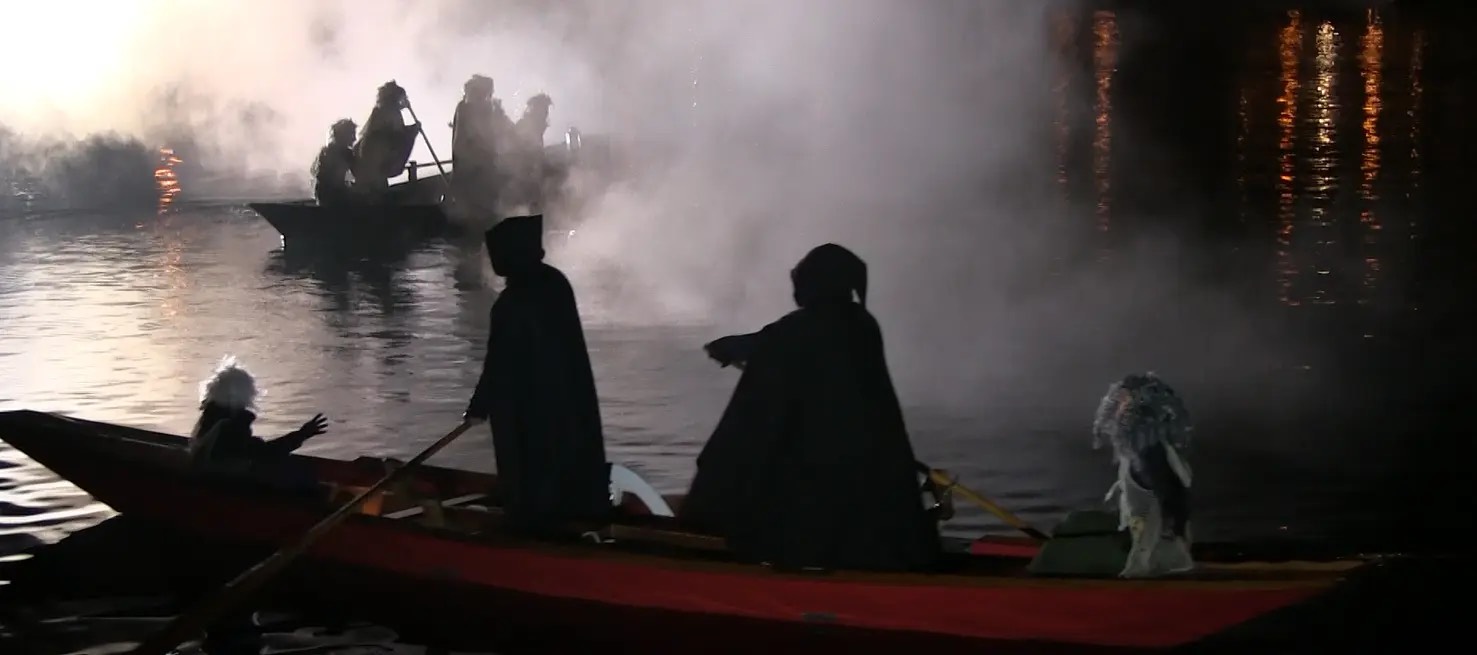
We begin with a little audio teaser involving contemporary witchcraft legends from Friuli, the region in which most of our Benandante cases unfolded centuries earlier. There, in the coastal town of Grado, on Epiphany Eve, terrifying sea-witches known as Varvuole arrive by boat, shrieking through the streets and threatening naughty children. Amid audio snippets of their bloodcurdling screams, we consider certain parallels between the Varvuole and Frau Perchta, Bone and Sickle’s favorite Epiphany Eve witch.
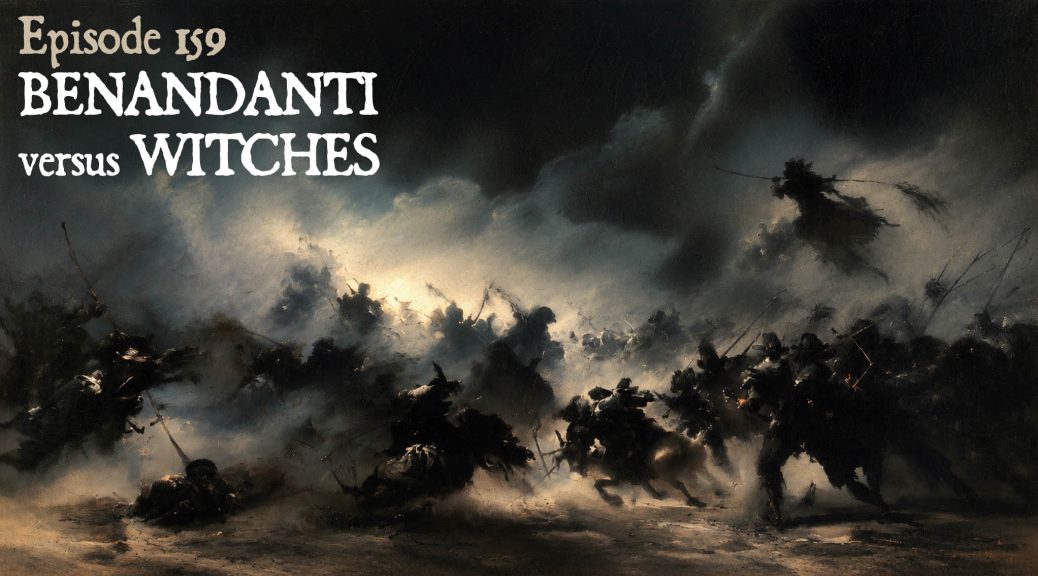
Next, we revisit the earliest recorded Benandante cases, those of Paolo de Gasparutto and Battista Moduco, whose testimonies describe vast armies of spirits gathering on Thursday nights during the seasonal Ember Weeks. Armed with bundles of fennel stalks, the Benandanti battled witches wielding stalks of sorghum, with the outcome determining the prosperity of the harvest. We hear of mysterious captains, elaborate banners, and thousands of combatants gathering in fields extending into neighboring territories.
We also learn how the spirits of the Benandanti could escape their sleeping bodies in the form of mice, and why disturbing those abandoned bodies might have fatal consequences.
Pausing to examine the peculiar weapons and timing of these battles, we explore the significance of fennel and sorghum, the Catholic Ember Days, and the recurring association of Thursday nights with witches’ gatherings throughout Europe.
As our investigation continues, we encounter testimonies in which the Benandanti’s original mission of protecting the harvest begins to give way to other supernatural concerns.
First, we hear from Caterina la Guercia, who describes her deceased husband’s nocturnal journeys in processions of the dead. Next comes Toffolo di Buri, whose accounts introduce witches devouring children, transforming into cats, and committing other atrocities. We then examine the extraordinary case of a midwife who turned a newborn infant over a roasting fire to protect it from witchcraft.
Our next witness, the cowherd Menichino della Nota, transports us into a more mysterious, dreamlike world in lurid testimony provided word-f0r-word by our very own Mrs. Karswell. We follow his spirit into the biblical Valley of Josaphat, where shadowy figures drift like smoke through misty fields scented with unseen roses. As inquisitors question him about the conventional witches’ sabbath, we discover how stubbornly he maintains that his supernatural companions serve God rather than the Devil.
Moving into the seventeenth century, we encounter increasingly troubling accounts in which the distinction between benevolent Benandanti and malevolent witches begins to dissolve.
The testimony of Maria Panzona introduces spirits traveling as butterflies, supernatural animals, magical substances, and a mysterious woman enthroned beside a well. Known as the Abbess, this imposing figure gradually emerges as the Devil himself. We follow Maria’s increasingly contradictory revelations through descriptions of witch initiations, journeys to Heaven and Hell, and her eventual imprisonment.
Next, we meet Giovanni Sion, whose nocturnal adventures involve magical ointments, fabulous treasures, feasting, and encounters with a horned Devil. We hear how Sion is branded with a heated fork after refusing to renounce the Holy Trinity, and how his testimony mixes professions of Christian loyalty with disturbing accounts of diabolical rituals.
Our final case takes us into the darkest territory yet. Michele Soppe, a Benandante who claimed to heal victims of witchcraft, describes gatherings presided over by the Devil in the form of a horned donkey. His testimony grows increasingly horrifying as he confesses to a pact with the Devil, the renunciation of Christianity, and the supernatural murder of children, including his own nephew.
Throughout these investigations, we trace the gradual transformation of the Benandanti from defenders of agricultural fertility into figures increasingly indistinguishable from the witches they once opposed. Along the way, we also consider how inquisitorial questioning may have influenced the extraordinary stories preserved in the historical record.
Finally, returning to Grado, where our journey began, we listen to a traditional Friulian charm intended to drive away the shrieking sea-witches. Invoking saints, storms, ogres, apparitions, and other supernatural terrors, this curious incantation offers a fitting conclusion to our exploration of the haunted fields and nocturnal spirit-world of old Friuli.