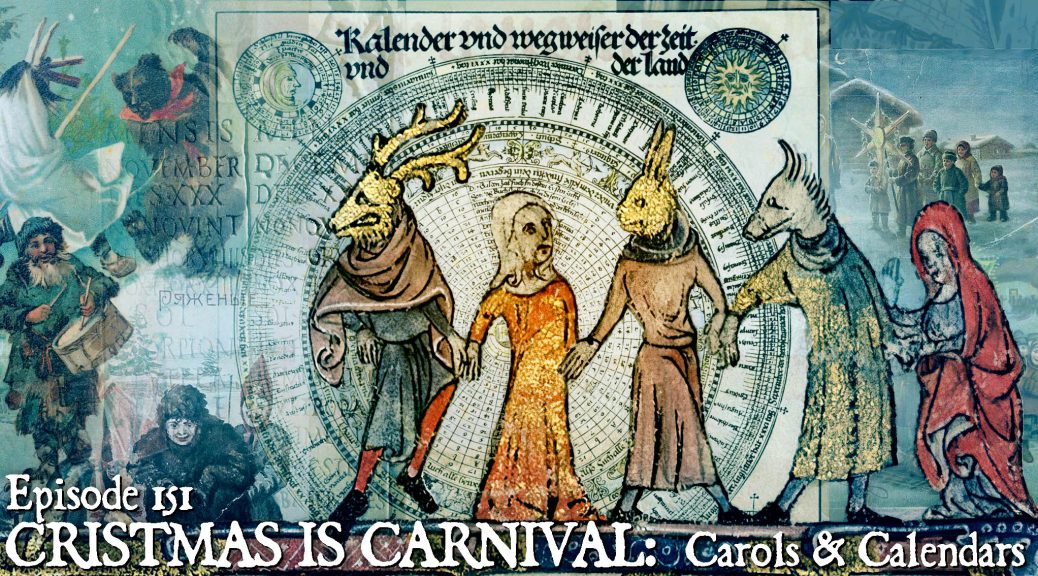
Christmas is Carnival: Carols and Calendars
Podcast: Play in new window | Download (Duration: 27:18 — 31.2MB)
Subscribe: Apple Podcasts | Spotify | Android | Podchaser | RSS | More
Historically, the celebration of Christmas and Carnival could overlap, and there is some reason to believe that customs associated with the former were inherited by the latter.
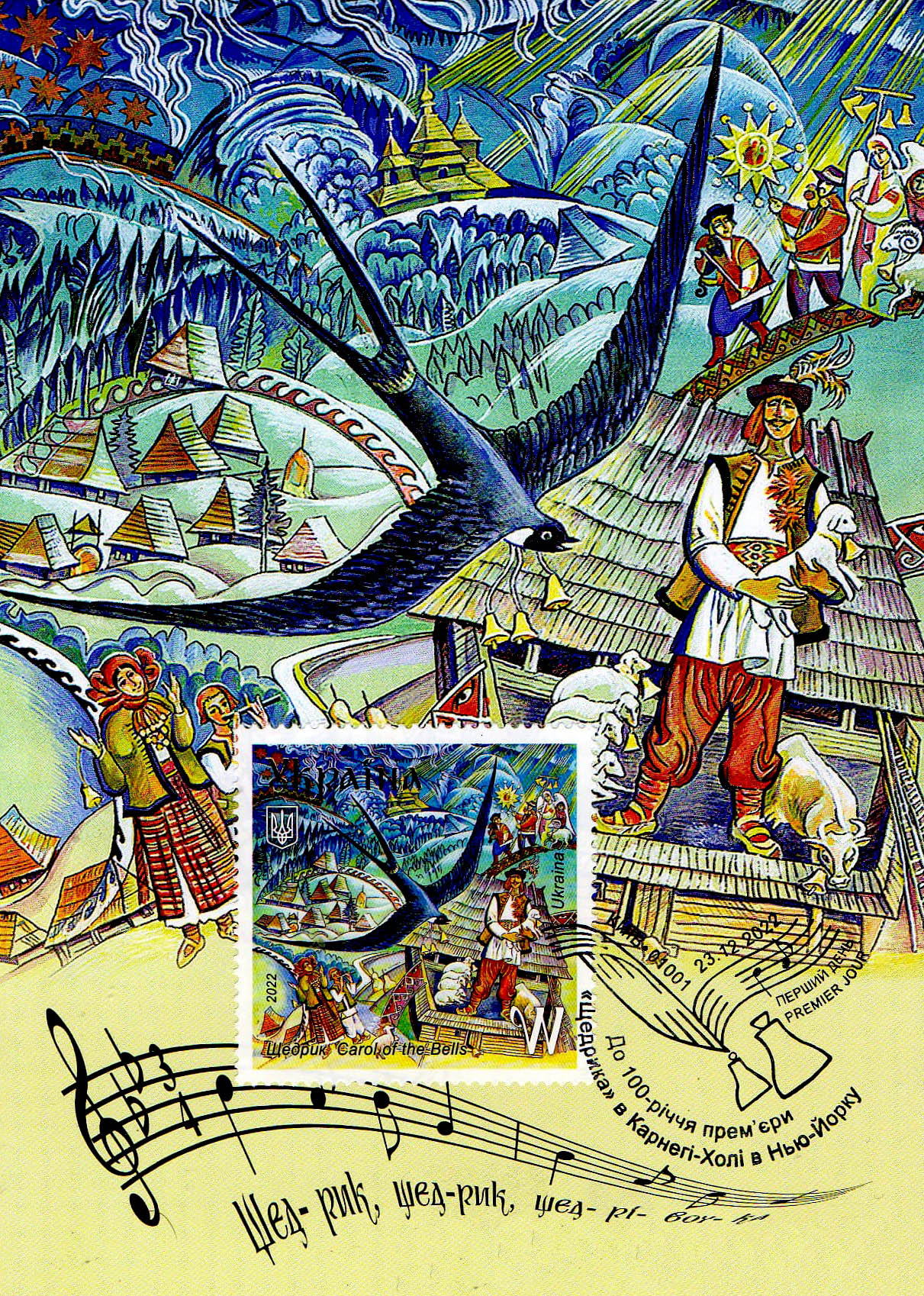
A clue to this calendrical shift is offered by the Christmas song, “Carol of the Bells,” which uses the melody of an old Ukrainian New Year;s carol, one which dates back to the era in which New Year was celebrated in March (hence the springtime imagery of its original Ukrainian lyrics).
After a brief look at the variable date chosen to celebrate the New Year throughout European history, we take some time to rethink our modern understanding of what constitutes the Christmas season. The common notion that the season ends on December 25 or January 1, possibly including the weeks leading up to those dates, in historical understanding, was reversed, with Dec. 25 representing the start of Christmastide, which at the very least ran until Epiphany (Jan. 6) or Candlemas (Feb. 2).
The merger of Christmas and Carnival is not only aided by the historically later end date of Christmastide, but also the variable start date for Carnival. A number of regional dates preferred for those festivities are discussed with Germany’s initiation of festivities on November 11 being the earliest.
Another reason to suspect that Carnival inherited some of its customs from Carnival is the carnivalesque quality of the Christmas Feast of Fools celebrated anywhere from Dec. 26 to January 6. The wild, and sometimes dangerous revels celebrated on those days (and discussed in Episode 100) were ended by local bishops at roughly the same time that Carnival celebrations in France and Germany emerged, suggesting re-channeling of anarchic impulses and customs.
Our discussion then turns to the Roman New Year, the January Kalends, which likely inspired chaotic elements around the Feast of Fools. Of particular interest here are accounts of celebrants dressing in animal hides and horns. a custom that seems to have survived in certain Carnival traditions, including a number discussed in my Carnival book. One of these, the Kurent of Slovenia, who happens to be rather similar to the Austrian Krampus across the country’s northern border.
In Western Bulgaria too, another Carnival figure, the Kuker, in western regions also makes use of animal hides and horns (as well as bells). Bulgaria also provides us with an interesting 20th-century case study of the merger of the traditions of Christmas (or “Surva,” the Bulgarian New Year) merging with springtime fertility customs of Carnival, both strands being associated with the Kuker.
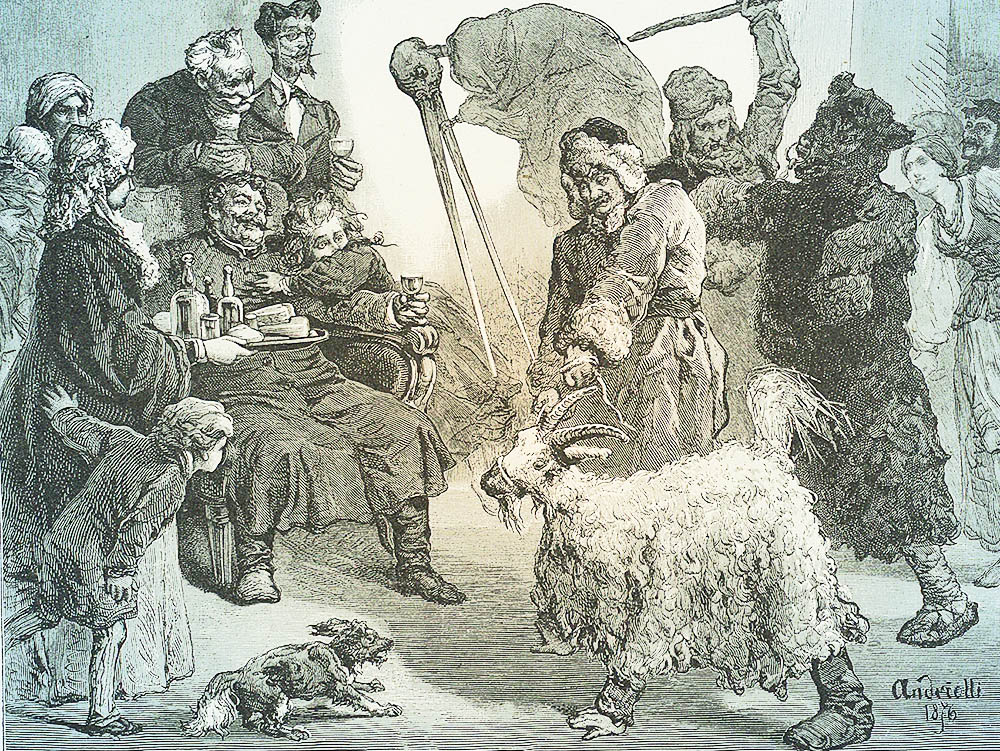
We wrap up with a brief look at Slavic celebrations of the Christmas cycle as Koliade (various spellings), a name for Christmastide and the customs associated with it, particularly door-to-door “good luck visits” incorporating short plays and songs, kolyadka in Ukrainian, the original of “Carol of the Bells” (Shchedryk/”Bountiful Evening”) being one of these songs
The sources for this show are Mr. Ridenour’s books The Krampus and the Old, Dark Christmas and A Season of Madness, Fools, Monsters, and Marvels of the Old-World Carnival.