Category: troll-cats

Trolls in Medieval Literature

Trolls in Medieval Literature

Trolls, as presented in medieval literature, are vastly different from the creatures we encountered in our last episode’s collection of 19th-century Norwegian folktales. These Viking Age trolls are more vividly and gruesomely described, and the “troll-women,” who frequently appear, are akin to witches.

We begin the show with a traditional song from the Faroe Islands, “Trøllini í Hornalondum,” telling the story of St. Olaf battling trolls on the coast of Norway. While the ballad presumably originated in Norway, it was first recorded by the Danish priest and historian, Anders Sørensen Vedel, in his 1591 publication, Hundredvisebogen, (the Book of 100 Ballads.”)

While St. Olaf (King Olaf II) is regarded as the saint who drove paganism from Norway, but this struggle was ongoing with trolls continuing to embody the old pagan world as belied by various tropes — their dislike of church bells, and fear of crosses. We’ll next look at an interesting case from Iceland presenting a direct conflict between a church and troll.  It was collected by the “Grimm of Iceland, Jón Árnason, a librarian and museum curator who published several collections of folktales, beginning in 1852. This one’s from his second volume of Icelandic Folktales, published in 1864.
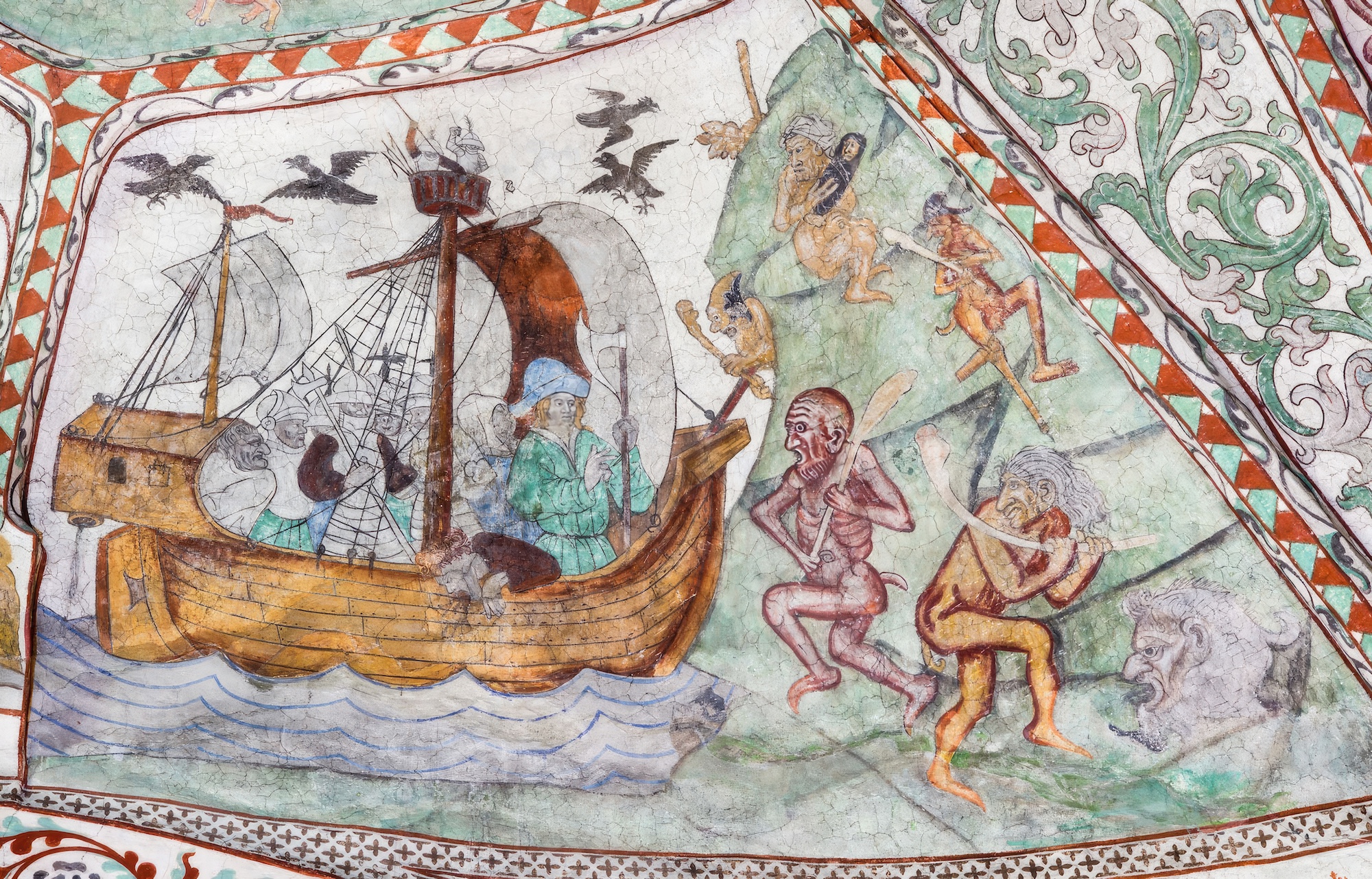
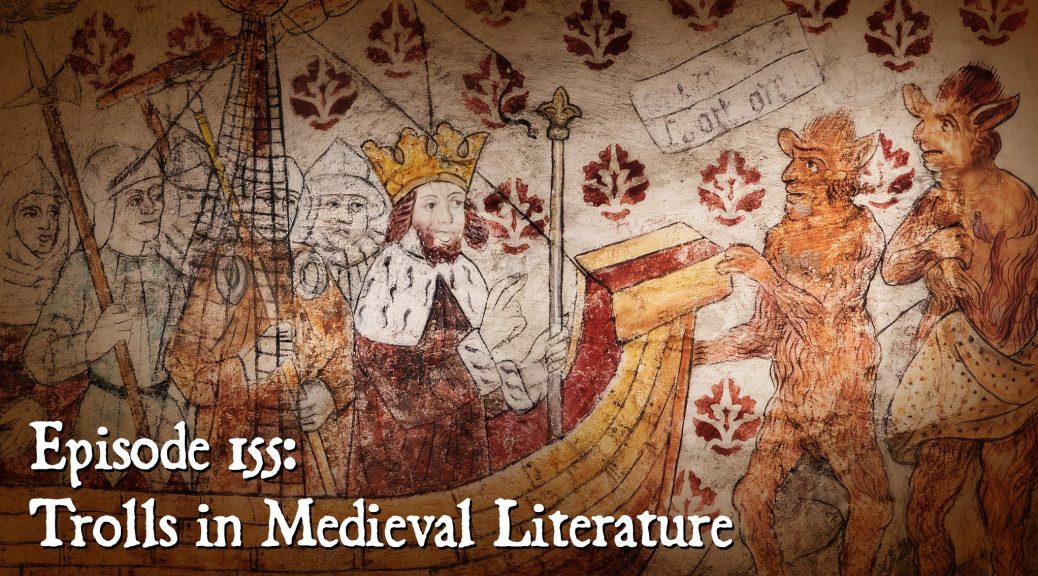
Encountering trolls -- St. Olaf's Journey, fresco by Albertus Pictor, ca 1470, Dingtuna Church, Västerås, Sweden
Encountering trolls — St. Olaf’s Journey, fresco by Albertus Pictor, ca 1470, Dingtuna Church, Västerås, Sweden

After this, we have some general comments on the historical relationship between trolls and giant (jötunn, Þurs and risi) as well as trolls and witches or sorcery (trollldom). Our remaining four stories (the medieval ones) present trolls of the Icelandic saga, epic stories written in Old Norse and relating the adventures of ancestral heroes or rulers, usually with some connection to history but with certain creative embellishments. A subset of the sagas, which take place in their own mythic timeline, the fornaldarsögur were simply written with entertainment in mind and more oriented toward magic and folklore – and trolls, so we’ll lok at a couple of those. And then there’s the þáttr, a sort of short story, sometimes folded into sagas, but often reproduced independently.

As this is a storytelling episode, we won’t spoil the tales with plot outlines, but the sources (in order) are:

  1. The 14th-century þáttr of Thorstein Ox-leg as translated in William Craigie’s 1896 compilation called Scandinavian Folk-lore: “The Trolls in the HeidarWoods.”
  2. A portion of the 16th-century Illuga Saga, translated by Philip Lavender of the Viking Society for Northern Research.
  3. The 14th-century Saga of Grim Shaggy-Cheek as translated by Peter Tunstall.
  4. The Saga of Orm Stórolfsson, as retold by William Craigie in Scandinavian Folk-lore – under the title: “The Giant on Sauðey” (Saudey).

We end with a song “Trøllini Trampa,” (“Trolls’ Tramp”) by the Faroese band, Spælimenninir
#19 Worm Songs and Beastly Sucklers

#19 Worm Songs and Beastly Sucklers

This episode examines the Lambton Worm, a dragon legend that inspired works by Bram Stoker and Ken Russel as well as well as the curious role of milk plays that story and in superstitions surrounding witchcraft.

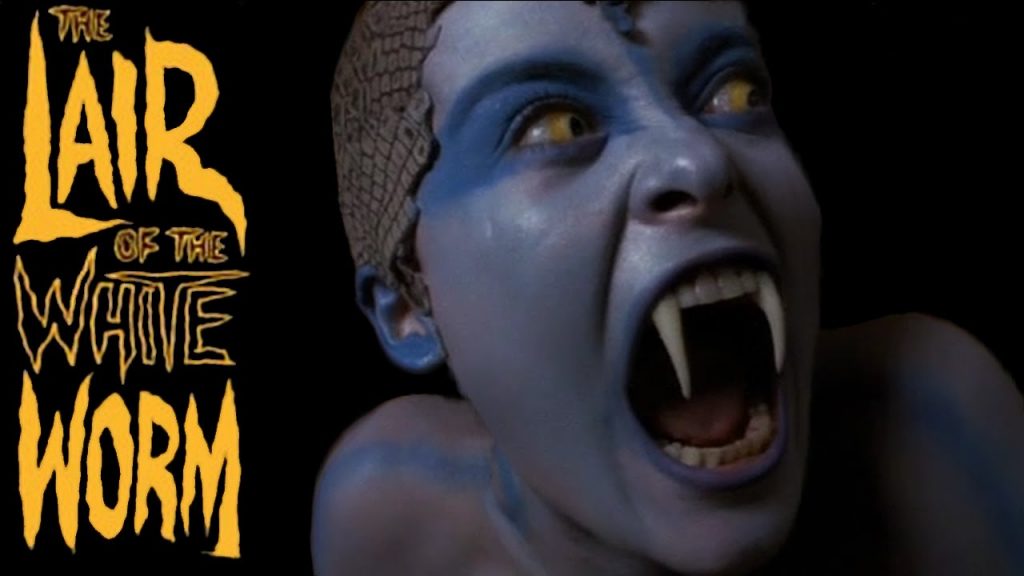
The show begins with Wilkinson and Ridenour reviewing a phone message from Blake Smith of the Monster Talk podcast, then proceed to briefly examine the 1989 Ken Russel Film The Lair of the White Worm, mentioning along the way his other film Gothic, which would be of interest to listeners.

Publicity image from the film

Bram Stoker’s final novel The Lair of the White Worm, upon which the Russel film is loosely based, is sadly far from his best work, written late in his life during a time of ill health. The story revolves around an aristocrat, Lady Arabella March, suspected of harboring an ancient, monstrous creature within a well hidden on her estate.  While the novel is a bit of a muddle, it does contain some intriguing descriptive passages that Wilkinson reads for us.

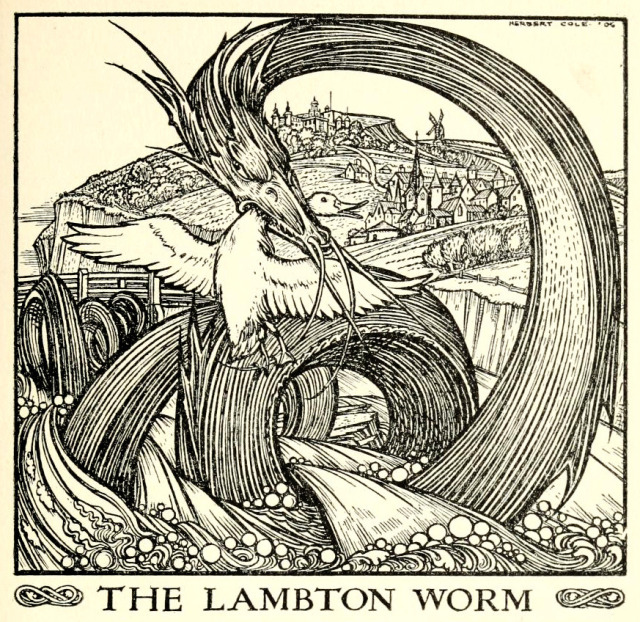
A snippet of a song from Russel’s film, presented as a folk song telling the story of the local worm legend is played and revealed to be a slightly revised version of an actual 1867 ballad about the Lambton Worm of Northeast England.  The legend tells how John Lambton of Lambton Hall hooked a weird and highly inedible creature while fishing, discards the beast, and lives to regret it. Without giving too much away, the story also involves a bloody battle with a dragon, a witch, a curse, and a lot of milk.

From English Fairy Tales (1913). Illus by iHerbert Cole & R. Anning Bell

The legend and song (which is written in the local Sunderland dialect) have become part of the identity of residents of County Durham and towns along the river Wear. In 2014, an entertaining symphonic retelling of the legend was presented in Durham Cathedral by The Durham University Brass Band, and we use a clip or two in the show. Most other clips are from one of two folk-play-style pub performances of the story by The Jeffreys and Hexham Morris.

We also look at a connection between the 1973 folk-horror classic The Wicker Man and the Lambton Worm legend.

The peculiar fondness of dragons for milk is next examined, beginning with a number of other dragon legends from England, some medieval tales briefly mentioned, and even an American newspaper from the 1930s.

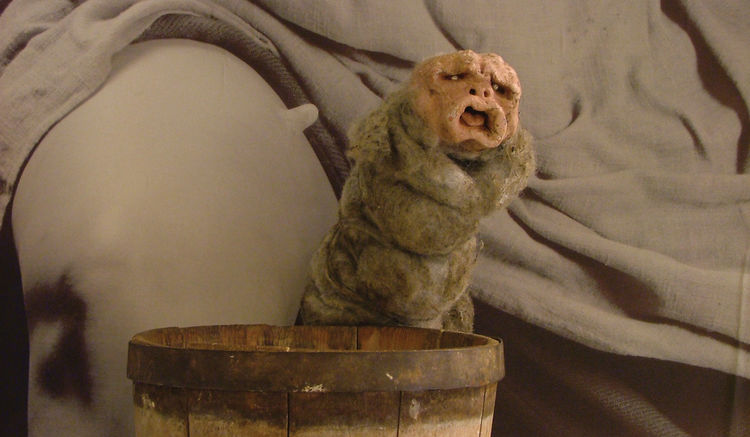
Tilberi display from The Museum of Icelandic Sorcery & Witchcraft

We then turn our attention to the “beastly sucklers” of the title.  These include various animals into which witches transformed themselves or created in order to steal milk (sucking it from livestock by night).  They are mlk-hares, the troll-cat, the troll-ball, and the Icelandic tilberi.

The show ends with a quick look at a couple other dragon ballads that also include witches, including the particularly strange “The Laily Worm and the Machrel of the Sea” in which a king’s daughter is transformed into a mackerel then obstinately refuses to be transformed back.