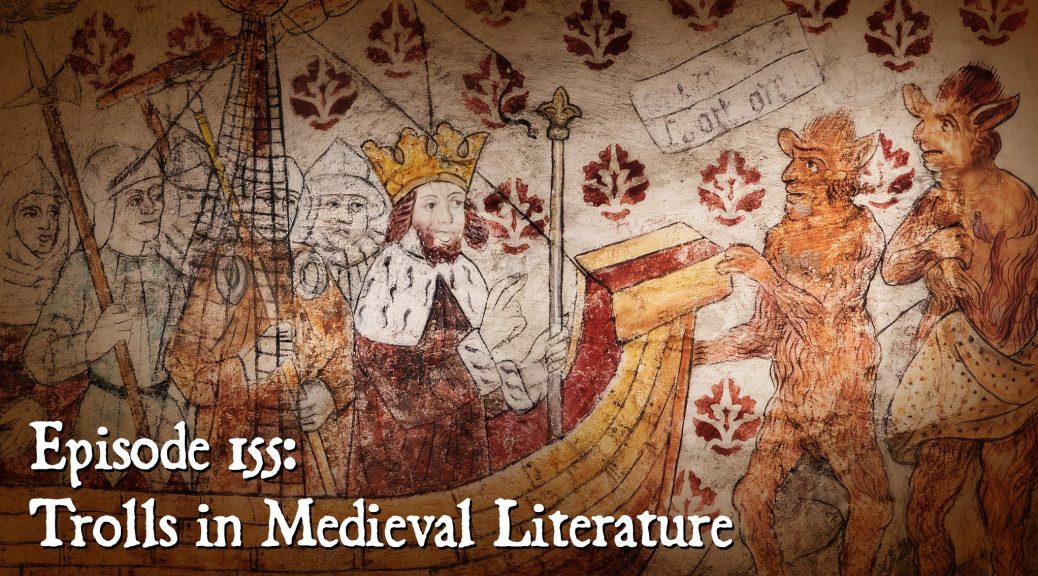
Trolls in Medieval Literature
Podcast: Play in new window | Download (Duration: 46:10 — 52.8MB)
Subscribe: Apple Podcasts | Spotify | Android | Podchaser | RSS | More
Trolls, as presented in medieval literature, are vastly different from the creatures we encountered in our last episode’s collection of 19th-century Norwegian folktales. These Viking Age trolls are more vividly and gruesomely described, and the “troll-women,” who frequently appear, are akin to witches.
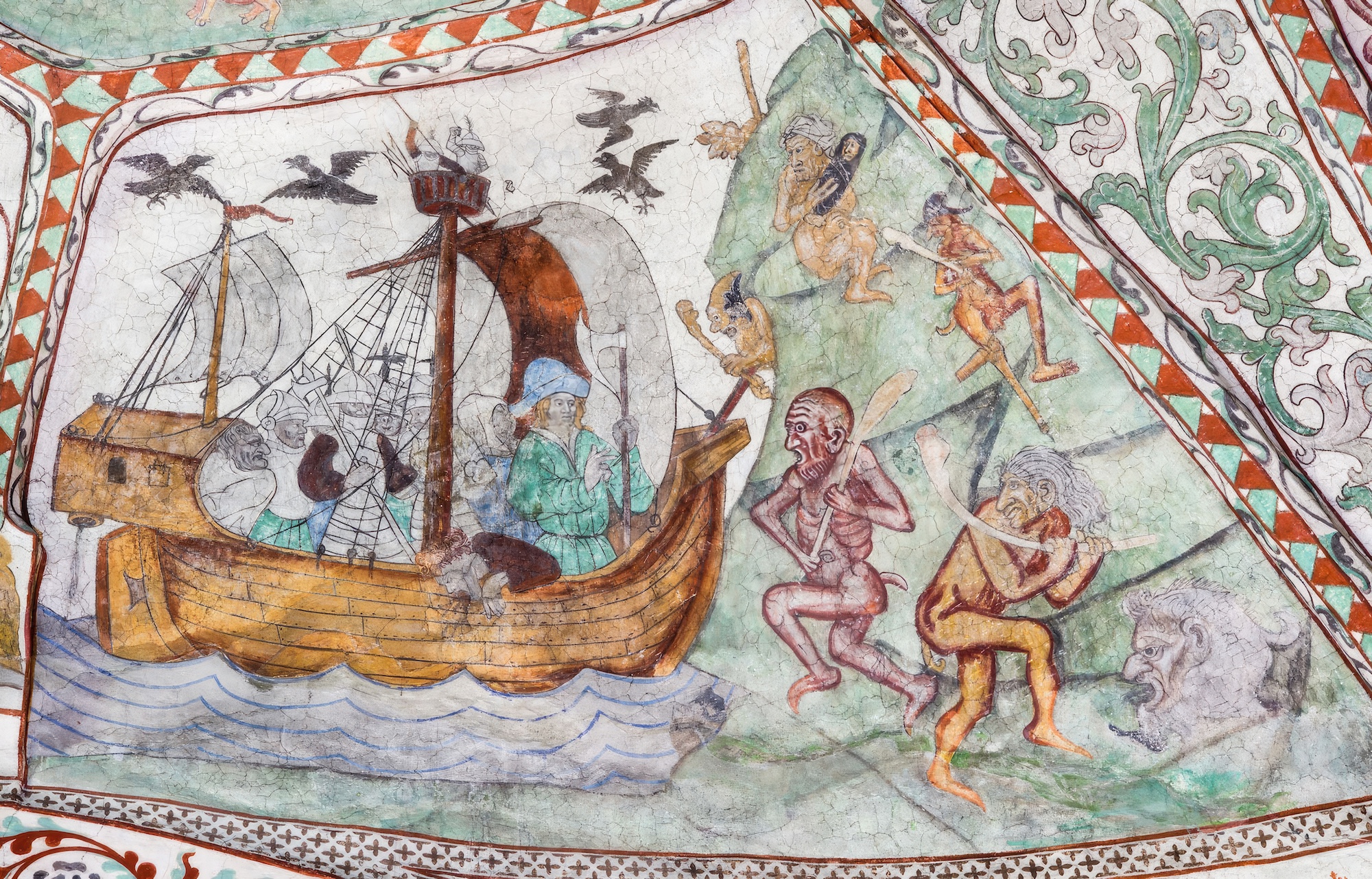
We begin the show with a traditional song from the Faroe Islands, “Trøllini í Hornalondum,” telling the story of St. Olaf battling trolls on the coast of Norway. While the ballad presumably originated in Norway, it was first recorded by the Danish priest and historian, Anders Sørensen Vedel, in his 1591 publication, Hundredvisebogen, (the Book of 100 Ballads.”)
While St. Olaf (King Olaf II) is regarded as the saint who drove paganism from Norway, but this struggle was ongoing with trolls continuing to embody the old pagan world as belied by various tropes — their dislike of church bells, and fear of crosses. We’ll next look at an interesting case from Iceland presenting a direct conflict between a church and troll. It was collected by the “Grimm of Iceland, Jón Árnason, a librarian and museum curator who published several collections of folktales, beginning in 1852. This one’s from his second volume of Icelandic Folktales, published in 1864.
After this, we have some general comments on the historical relationship between trolls and giant (jötunn, Þurs and risi) as well as trolls and witches or sorcery (trollldom). Our remaining four stories (the medieval ones) present trolls of the Icelandic saga, epic stories written in Old Norse and relating the adventures of ancestral heroes or rulers, usually with some connection to history but with certain creative embellishments. A subset of the sagas, which take place in their own mythic timeline, the fornaldarsögur were simply written with entertainment in mind and more oriented toward magic and folklore – and trolls, so we’ll lok at a couple of those. And then there’s the þáttr, a sort of short story, sometimes folded into sagas, but often reproduced independently.
As this is a storytelling episode, we won’t spoil the tales with plot outlines, but the sources (in order) are:
- The 14th-century þáttr of Thorstein Ox-leg as translated in William Craigie’s 1896 compilation called Scandinavian Folk-lore: “The Trolls in the HeidarWoods.”
- A portion of the 16th-century Illuga Saga, translated by Philip Lavender of the Viking Society for Northern Research.
- The 14th-century Saga of Grim Shaggy-Cheek as translated by Peter Tunstall.
- The Saga of Orm Stórolfsson, as retold by William Craigie in Scandinavian Folk-lore – under the title: “The Giant on Sauðey” (Saudey).
We end with a song “Trøllini Trampa,” (“Trolls’ Tramp”) by the Faroese band, Spælimenninir