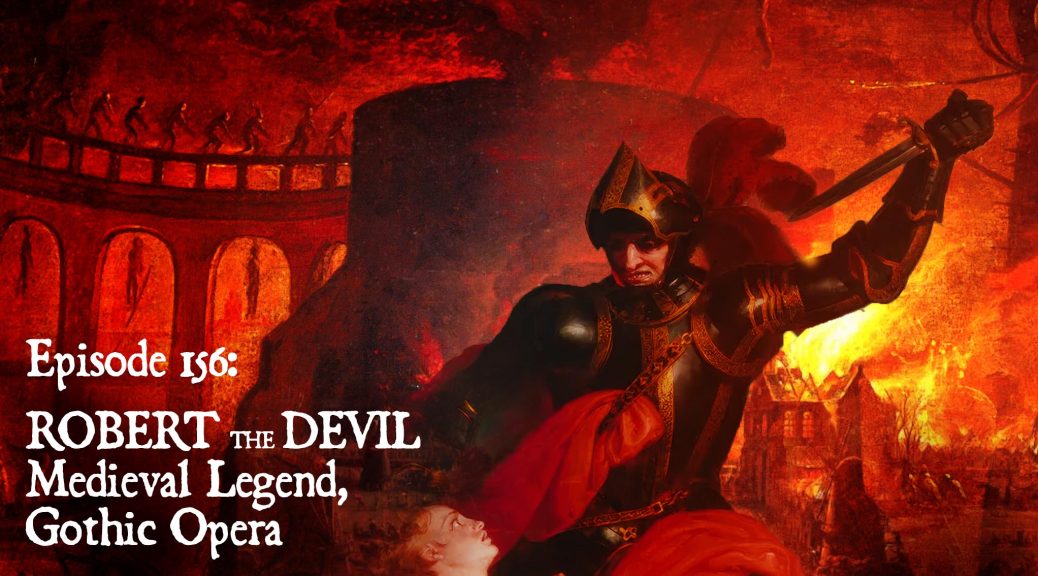
Robert the Devil: Medieval Legend, Gothic Opera
Podcast: Play in new window | Download (Duration: 45:34 — 52.2MB)
Subscribe: Apple Podcasts | Spotify | Android | Podchaser | RSS | More
Robert the Devil is a supernatural medieval legend that inspired a 19th-century French opera, which incorporates key elements from a seminal Gothic novel. The opera and legend are substantially different but both interesting.
We begin with Giacomo Meyerbeer’s 1831 opera, Robert le diable, which gained notoriety for a ballet sequence in Act III, which portrays an attempted seduction of the hero, Robert, Duke of Normandy, by the ghosts of corrupted nuns, freshly risen from their crypts. The scene is not found in the original legend, but as we learn, was borrowed from a particularly sensationalistic early Gothic novel,The Monk, written by Matthew Gregory Lewis in 1764. We also learn that Meyerbeer’s chief librettist, Eugène Scribe later went on to crib another storyline from Lewis’ The Monk for the 1854 opera by composer Charles Gounod, La nonne sanglante (“the bloody nun”).
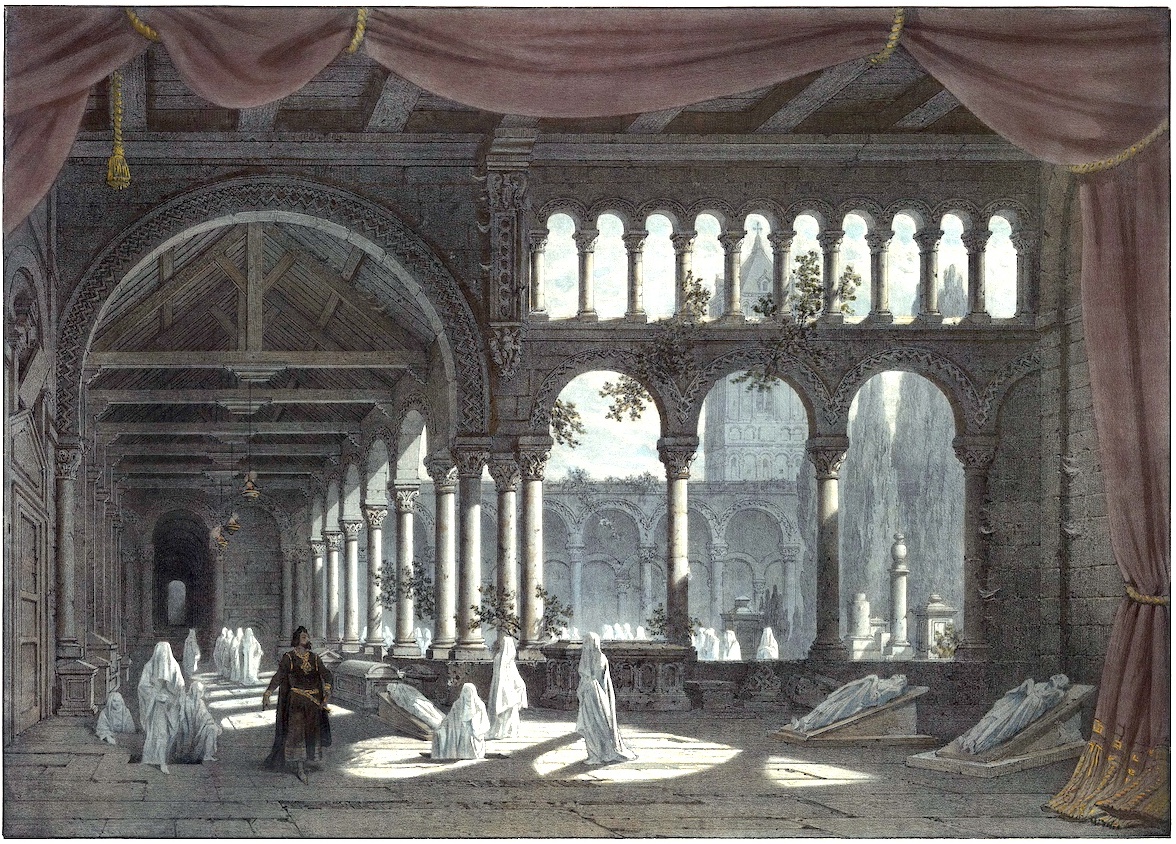
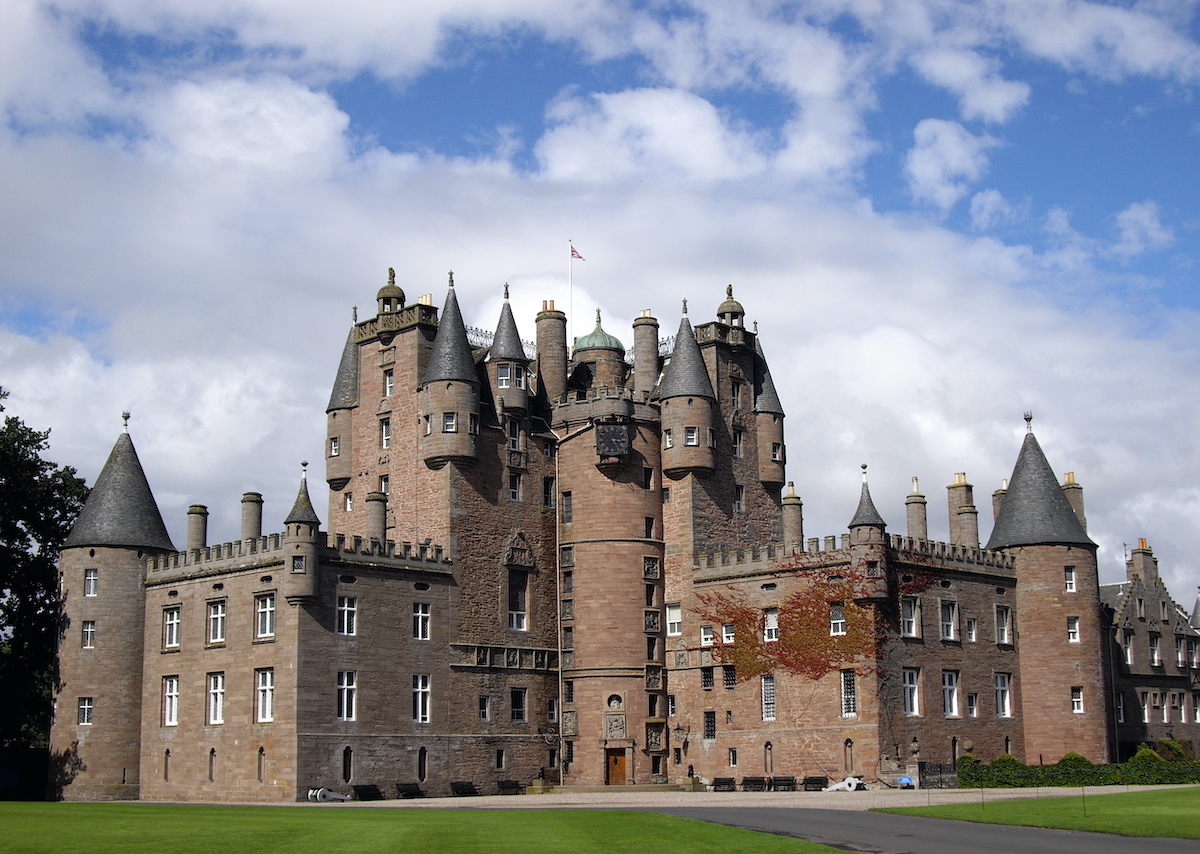
Along the way, we learn how Robert le diable helped save the financially imperiled Paris Opera after its royal subsidy had been withdrawn following the July Revolution of 1830. Along with public curiosity about the scandalous ballet, ticket sales owed much to the 19th-century equivalent of special effects — flashy and innovative stagecraft (new gaslight design, trapdoors, floating will-o-the-wisps, etc.) and a spectacular set replicating a ruined gothic monastery. Hans Christian Andersen, George Sand and Frédéric Chopin lavishly praised the production. Honoré de Balzac and Alexander Dumas worked mentions of the opera into their novels. Edgar Degas painted not one but two renderings of the Ballet of the Nuns.
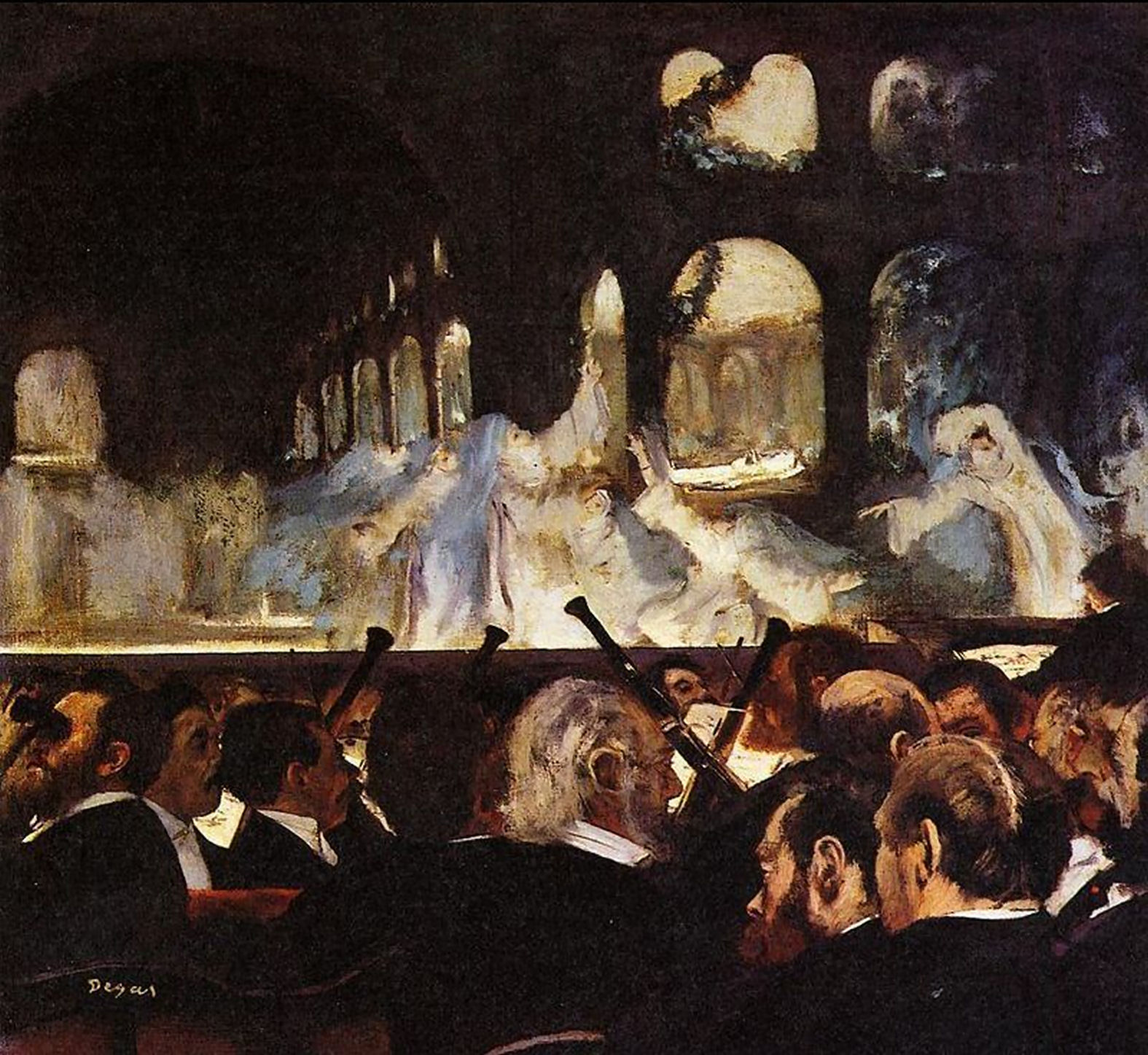
The opera also gave birth to a new style of ballet, one linked to Romanticism’s interest in the supernatural: ballet blanc, “white ballet” named for the innovative long, flowing skirts that lent themselves to wafting movements suggestive of misty wisps moving in the darkness. The opera’s 1847 London premiere was attended by Queen Victoria and featured superstar soprano Jenny Lind as Robert’s sister. Traffic came to a standstill as unruly spectators mobbed the streets hoping for glimpse of either celebrity.
The second half of our episode tells the original story of Robert the Devil. It first appeared around 1250, sketched out in short form by the Dominican monk, Étienne de Bourbon, in a collection of exempla, or moral tales intended to be used by priests in their homilies. A couple decades later, details were filled out in a longer, anonymous poem, preserved in France’s National Library. Then by the late 14th century, it was rendered as a miracle play in “Forty Miracles of Our Lady,” commissioned by a guild of Parisian goldsmiths. By 1500, the story had arrived in Britain. That year, Wynkyn de Worde, assistant to pioneering London printshop owner Thomas Caxton, issued a chapbook prose translation hewing close to the French 14th-century poem.
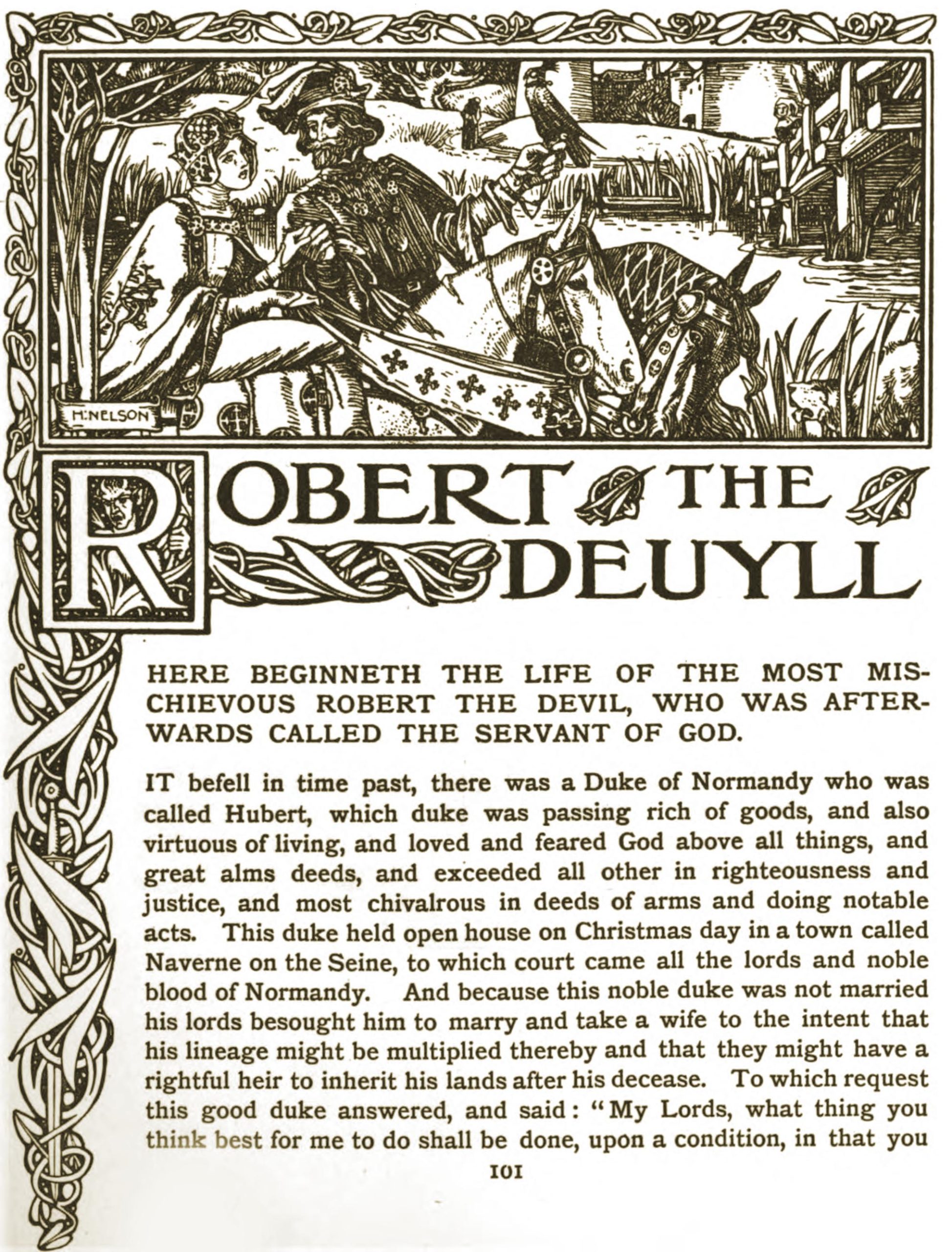
I found the Wynkyn de Worde text reproduced in a handsome 1904 volume complete with line illustrations, decorative initials, and borders reminiscent of the Arts and Crafts books of William Morris. As promised in the episode, here is the link to that book: Robert_the_Deuyll.pdf. (Visit the show notes on the Bone and Sickle website if you can’t click link).
As for the story itself, it’s best you enjoy it without spoilers as told by Mrs. Karswell. It’s full of demonic wrath, battles, court intrigue, miracles, pathos, and a very and prolonged peculiar penance. All told in charming 16th-century language with all the little sound-design extras you’ve come to expect from Bone and Sickle.