Category: frogs

Rhymes for Those Who Can Neither Read Nor Run

Rhymes for Those Who Can Neither Read Nor Run

Gammer Gurton’s Garland, published in 1784, is one of the earliest collections of English nursery rhymes, and contains verses both familiar and alarmingly unsettling.

Intended to be read to toddlers (i.e., “children who can neither read nor run,” according to its subtitle) and named after a fictitious Grandma (“Gammer”) Gurton, who’d be analogous to Mother Goose, the volume were assembled by the eccentric scholar Joseph Ritson, who was known for his collecting of Robin Hood ballads, vegetarianism and ultimate descent into madness.
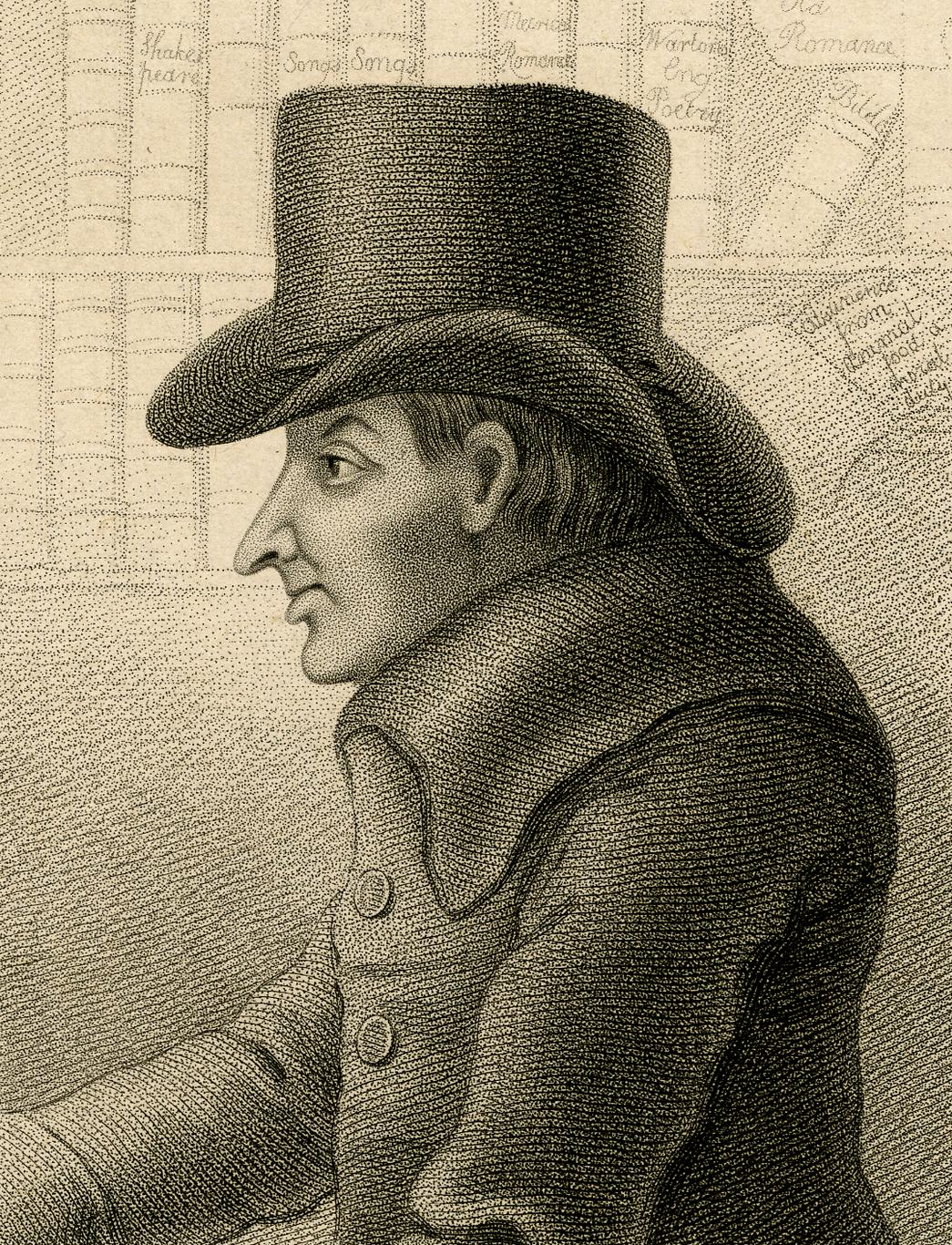
Portrait of Joseph Ritson by James Sayers, early 1800s.

We begin our episode with a snippet of a 1940s’ rendition of “Froggy Went a-Courting” by cowboy singer Tex Ritter. It’s a relatively modern take on Ritson’s “The Frog and the Mouse.” But like quite a few rhymes in the collection, this one had appeared in print earlier. Already in 1611, British composer of rounds and collector of ballads, Thomas Ravenscroft, had written out both lyrics and musical notation for “The Marriage of the Frogge and the Mouse,” a song he described as a folk song or “country pastime.”

While a few other rhymes in Ritson’s collection were borrowed from one of two earlier editions of nursery verses (both published as Tommy Thumb’s Song Book 40 years earlier), most of what he collected appeared for tge first time in Gammer Gurton’s.

We hear a bit about some of the familiar rhymes that premiered in this collection, including Goosey, Goosey Gander, Ride a Cock-Horse to Banbury Cross (with the “rings on her fingers and bells on her toes” lady), Bye, Baby Bunting, and There Was an Old Woman who Lived in a Shoe.” Ritson’s version of the last, however, takes a rather rude and unexpected turn.
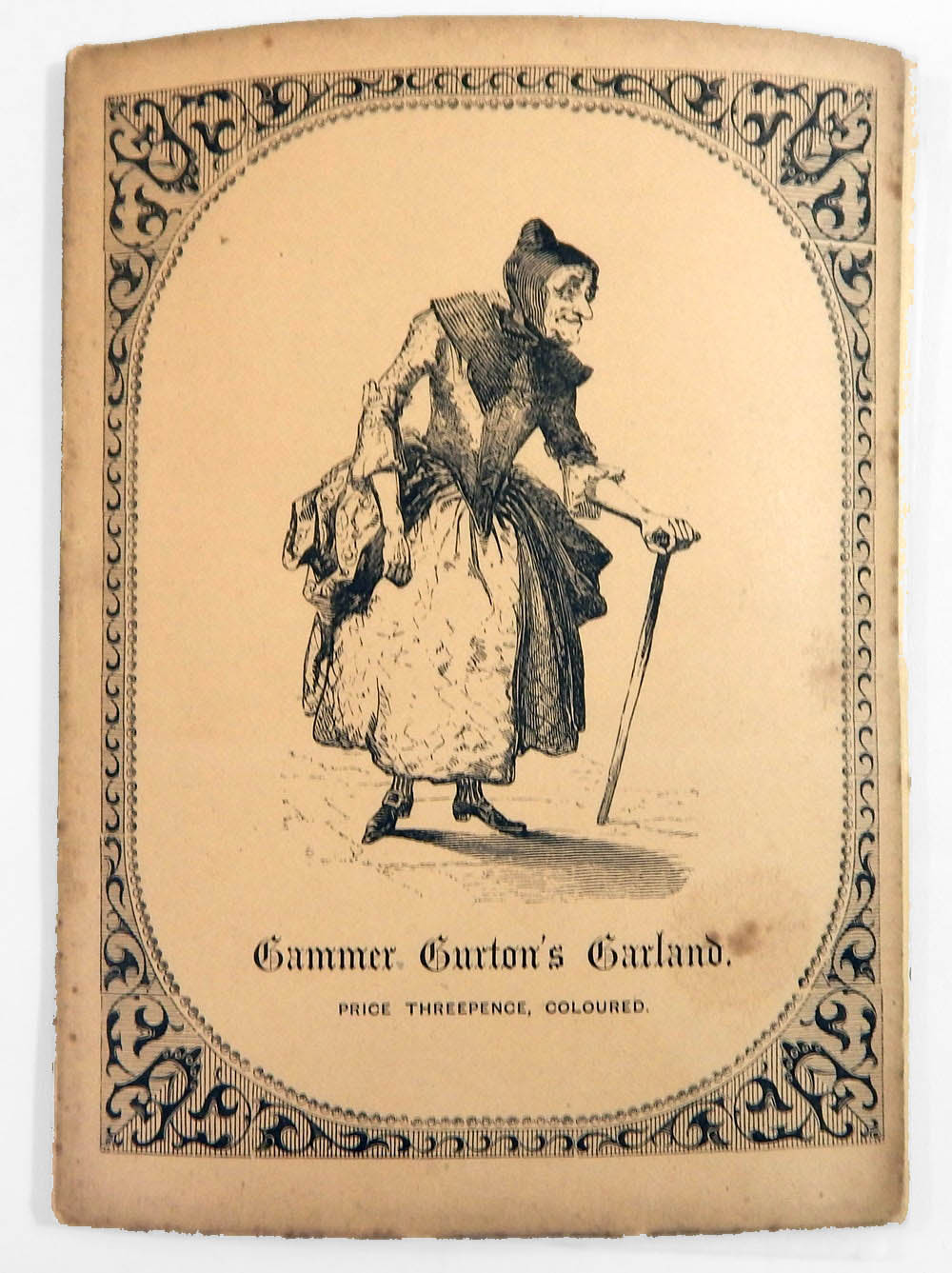
1865 edition of Gammer Gurton’s

Many, if not most, of Ritson’s rhymes seem to have been weeded out of the gentile or sentimental collections we know today. Naturally, we devote attention particularly to these objectionable verses. Included are a handful of aggressively nonsensical rhymes, which could pass for 18th-century Dada and verses notable for their cruelty. The most alarming contain brutal slurs, threats, and playful references to assault, adultery, matricide, suicide, and animals going to the gallows.

The last third of our episode is dedicated to poems noteworthy for their survival as musical ballads. The first discussed is the basis for song “Lady Alice,” which later appears in James Child’s 1860 collection The English and Scottish Popular Ballads. Ritson’s version, “Giles Collins and Proud Lady Anna,” is a greatly simplified version of the ballad later cited by Child. While toddlers might appreciate the simpler storytelling, the subject matter — namely, doomed lovers — is not the normal stuff of healthy nursery rhymes. More surprising, is the fact that Ritson’s story begins with Giles Collins in the process of dying and Lady Anna dead (of heartbreak) within a few verses. After their deaths, a tentative suggestion of undying love, a lily reaching from Giles’ grave toward Anna’s, is destroyed – an unhappy turn on the not uncommon motif of a rose and briar entwining over lovers’ graves.

We close with a discussion of “The Gay Lady who Went to Church,” an innocuous-sounding rhyme, intertwined with the history of two rather gruesome folk songs popular around Halloween: “There Was an Old Lady All Skin and Bones” and “The Hearse Song” AKA “The Worms Crawl In.” Also discussed is a surprising link between Ritson’s nursery rhyme and a faux-historical ballad invented for the very first Gothic novel, Matthew Gregory Lewis’ The Monk.


INFORMATION RE. THE FOLK-HORROR GIVEAWAY DISCUSSED IN THE SHOW OPEN CAN BE FOUND HERE: https://www.boneandsickle.com/giveaway/
Toad Magic

Toad Magic

Toads have long been associated with magic, as witches’ familiars and as a source both of poison as folk healing.

We begin with a poison allegedly brewed from a toad by the “wise wife of Keith,” Agnes Sampson, one of the accused in Scotland’s North Berwick witch trials in 1591-2. The poison was to have been used against Scotland’s James VI before he ascended England’s throne as James I.  At the center of the trial was the accusation that Sampson and others had raised a storm to sink the ship bearing James home from Oslo with his new wife Anne of Denmark.

Macbeth and the Witches
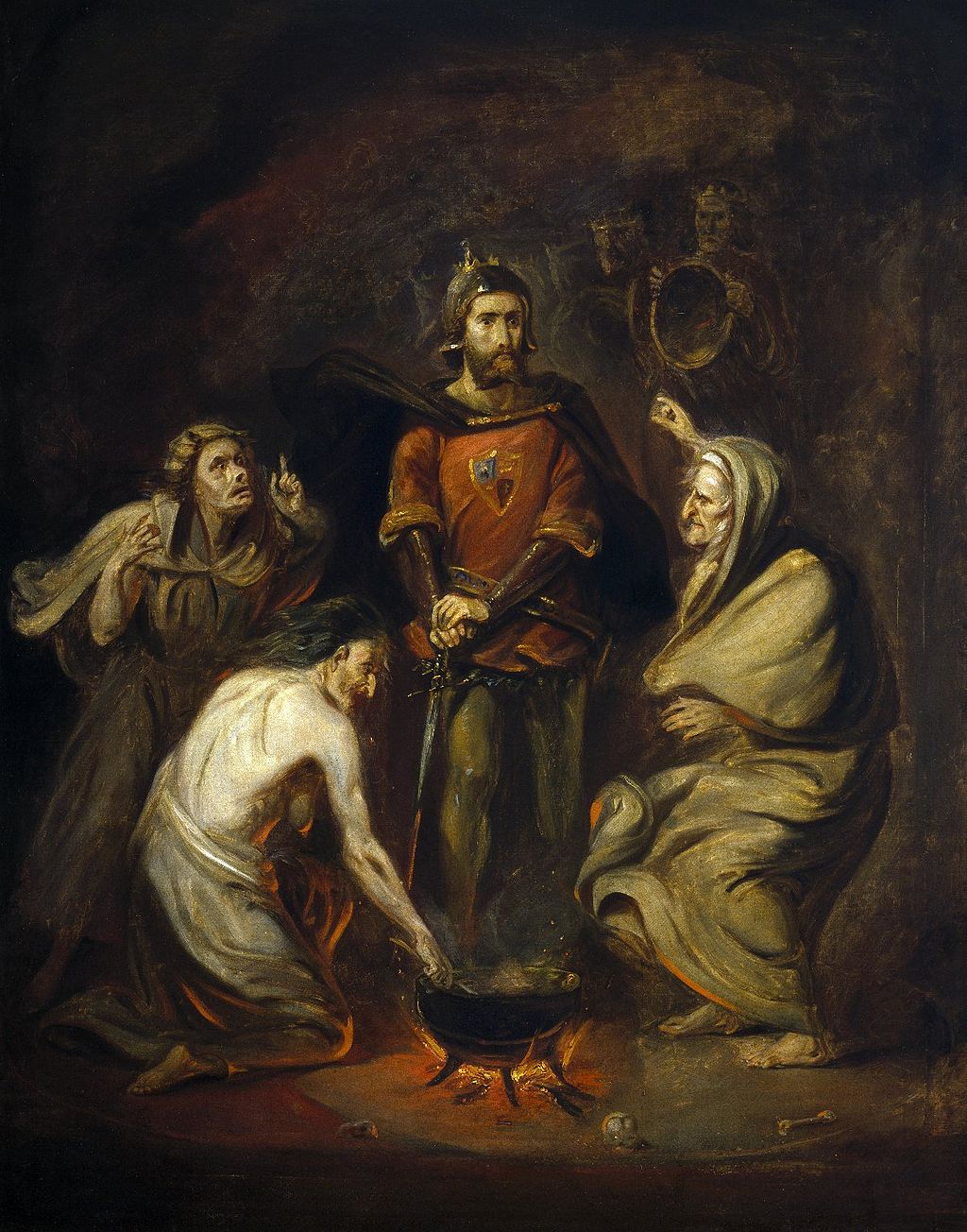
Macbeth and the Witches (Thomas Barker, 1830)

Shakespeare seems to allude to elements from this trial in his play Macbeth, mentioning toads and frogs as elements of  the concoctions brewed by his witches in Act IV and seemingly referencing the events in an aside uttered by a witch regarding sending a storm against an enemy’s ship.  The Bard’s inclusion of “real” witchcraft in his play has long been said to be the reason for a “curse” upon productions of Macbeth. Included in our discussion is a particularly ugly (and lethal) 1848 incident in New York City attributed to this bit of lore.

A witch’s servant, or familiar, in the form of a toad is also alluded to as an offstage character in Macbeth.  Mrs. Karswell reads for us a number of accounts from 16th and early 17th century England presenting toad familiars sent to torment the enemies of witches.  We also hear of a toad exploding in a fire, and toads sustained on the blood of their witch mistresses, as well as a sad story from Newmarket, England, involving William Harvey, physician to Charles I, and an bruitish attempt to subject an alleged toad familiar to scientific scrutiny.

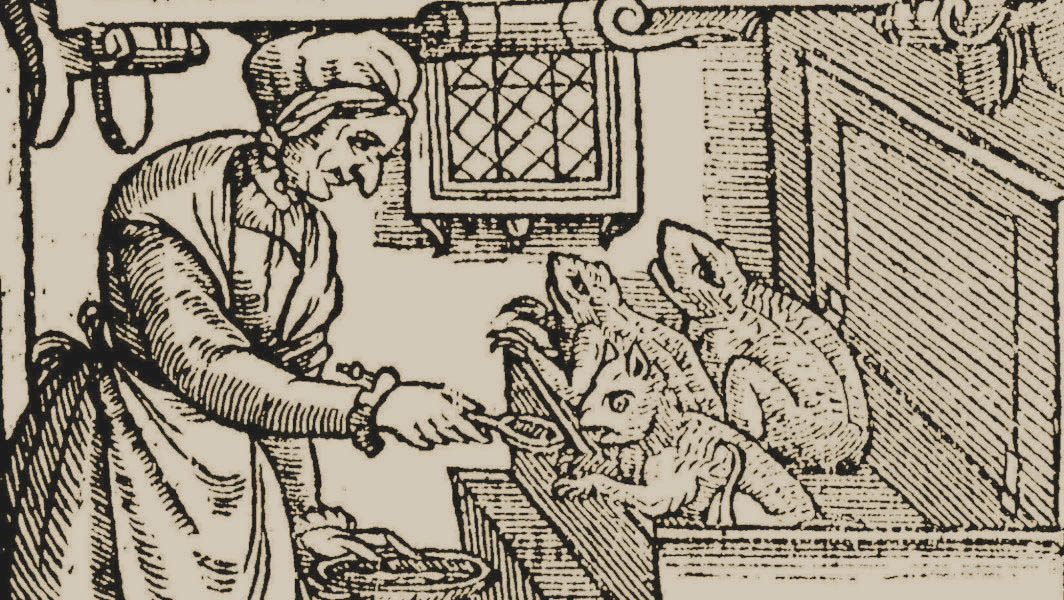
A woodcut illustration from a book published in 1579 of a witch feeding her ‘familiars’.

Next we discuss the fear of toad’s venom in the Middle Ages, hearing some comments on the subject from 12th-century German mystic and theologian Hildegard von Bingen and a tale associated with the English boy-saint William of Norwich involving some prisoners and an unfortunate attempt at the use of toad poison.

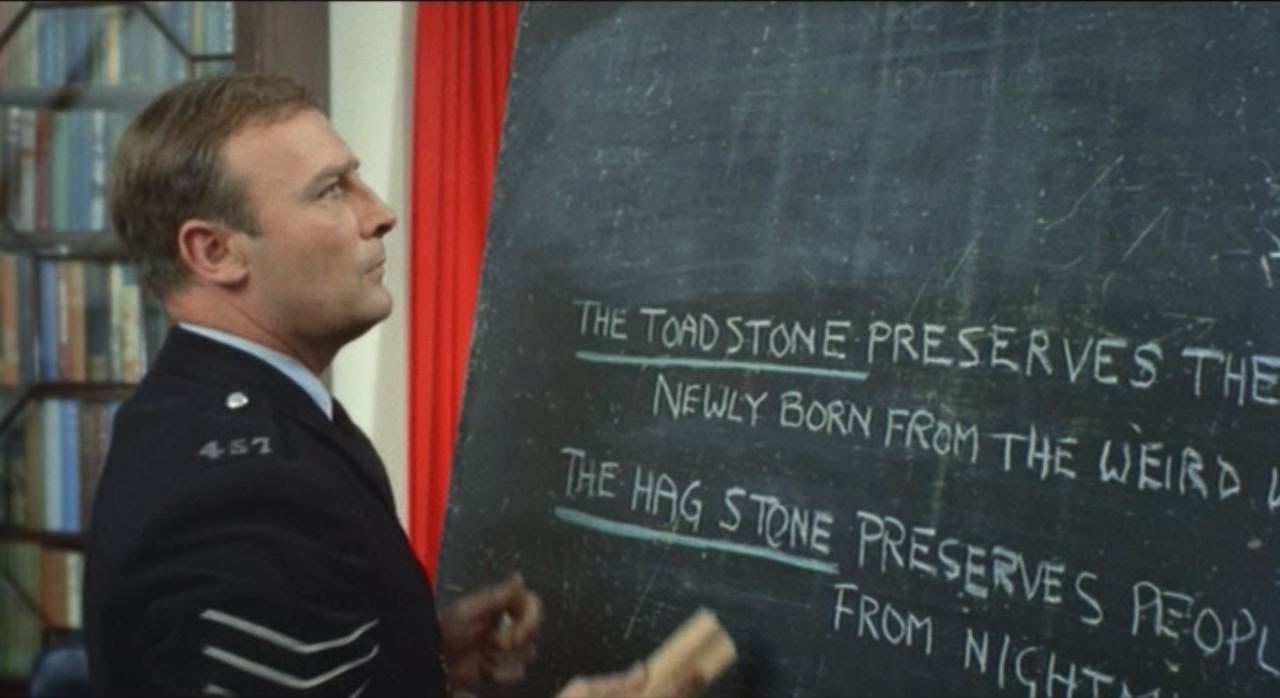
Toad’s venom, according to medieval folklore, could be neutralized by the toadstone, a particular mineral also assigned powers against stomach and kidney ailments.  We hear of a peculiar method of obtaining this prized artifact and an obscure reference to the toadstone in the 1973 folk-horror classic The Wicker Man.

Wicker Man
Toadstone lesson from “The Wicker Man” (1973)

We also hear a clip from The Wicker Man in which a toad or frog is used in folk medicine to cure a sore throat. Superstitions about toads and their magical efficacy against various ailments continued into the 19th century, resulting in the phenomena of traveling “toad doctors” and “toad fairs.”  The use of toad bones in a midnight ritual performed by English “Toadmen” in order to gain mastery of horses to be trained is also discussed as is the discovery of miniature frog coffins, stashed in Finish churches, in a folk-magic practice similar to the British and American use of “witch bottles.”

We return to the continent and the discussion of toads’ association with witches (and heretics) as conceived by the Church in terms of service to Satan.  This topic brings us a letter written by Pope Gregory IX to bishops of the German Rhineland involving Satan as a french-kissing toad, as well as a ritual attributed to French and Italian members of the Waldesenian sect allegedly consuming a ritual beverage brewed from toad excrement.

In Spain’s Basque province of  Navarre, home to the “Cave of Witches” at Zugarramurdi, witchcraft trial testimonies demonstrate a particular emphasis on toads.  We hear of them raised by novice witches in the fields, used to poison the land, and dancing at the witches’ sabbath.

Toads are sometimes mentioned as an ingredient of the “flying ointment” believed to have induced a visionary experience transporting witches to hilltop revels. However, this effect is more likely attributed to other ingredients in historical recipes (particularly plants of the nightshade family.)

While the venom produced by toads of the Old World doesn’t seem to contain the quality and quantity of bufotoxin necessary to produce such visions, this can’t be said for certain New World species.

One of these is the Cane toad (bufo rhinella) that invasive species best known for infesting Australia, Florida and other southern states and native to South and Central America.  In the Caribbean, it’s been identified by Harvard ethnobotanist Wade Davis as a possible ingredient in a drug administered in Haiti to transform an enemy into a zombie, (i.e., to drug the individual into a deathlike state from which he is later “resurrected.”).  Research into this subject was documented in Davis’ 1985 book The Serpent and the Rainbow, later serving loosely as inspiration for Wes Craven’s 1988 film of the same name (from which we hear a clip).

The show ends with a quick look at the role of the Colorado River toad or Sonoran Desert toad, (bufo alvarius) as a source of psychedelic experience, particularly as its been reinvented with the last years as part of a life-changing “shamanic experience” for drug consumers already bored with ayahuasca.